Table of Contents
ToggleLantern decor has become a cornerstone of modern living room design, offering warmth, character, and versatility that few other accessories can match. Whether someone is drawn to industrial metal frames, coastal-inspired designs, or Moroccan-style pierced metalwork, lanterns bridge the gap between functional lighting and decorative statement pieces. They work in traditional, contemporary, minimalist, and eclectic spaces alike. The beauty of lantern decor is that it doesn’t require a design overhaul, homeowners can introduce lanterns gradually, building a cohesive look that reflects their personal style. This guide walks through seven proven lantern placement and styling strategies to elevate any living room.
Key Takeaways
- Lantern decor ideas for living rooms range from hanging fixtures to floor and table placements, offering warmth and visual interest without requiring a full design overhaul.
- Hanging lanterns work best at 12 to 16 inches in width for standard 8 to 9-foot ceilings, and staggered heights prevent monotony while creating architectural interest.
- Floor lanterns placed in corners or beside furniture add vertical interest and ambient lighting, with symmetrical pairs suiting formal spaces and single placements working well in contemporary settings.
- Clustering multiple lanterns of varying heights and sizes in odd-numbered groupings around fireplaces or alcoves creates dramatic focal points while maintaining cohesive visual appeal.
- Seasonal lantern styling adapts year-round by switching interior contents, such as greenery for spring or warm-toned LED candles for fall and winter, maximizing a single lantern purchase across multiple design iterations.
- Table lanterns on coffee tables and console surfaces serve as functional centerpieces when paired with books or plants, while wall sconce lanterns provide elegant lighting solutions for spaces with limited floor room.
Hanging Lanterns for Dramatic Overhead Appeal
Hanging lanterns command attention from above and instantly add architectural interest to a living room. They work especially well in spaces with high ceilings or open floor plans where overhead fixtures can become focal points without overwhelming the room.
Care should be taken when installing any ceiling-mounted fixture. A single pendant lantern suspended above a seating area or near a bookshelf draws the eye upward and creates a sense of balance. For added drama, homeowners can install two or three lanterns at staggered heights, this works particularly well over a long console table or along a dining boundary in an open-concept layout. The staggered approach prevents a line-of-sight monotony and feels more intentional.
When selecting a hanging lantern, measure the ceiling height and pendant diameter to avoid a fixture that looks cramped or oversized. A lantern that spans 12 to 16 inches in width typically suits standard ceiling heights (8 to 9 feet) and doesn’t dominate the space. Black metal lanterns with clear or frosted glass panels suit contemporary and industrial living rooms, while brushed bronze or aged brass finishes pair beautifully with traditional or transitional decor.
Safety consideration: if a lantern uses an open flame candle, keep it away from curtains, upholstered furniture, and overhead structures. Most modern hanging lanterns accept LED candles or plug-in electric bulbs, which eliminate fire hazard while maintaining the aesthetic warmth.
Floor Lanterns to Create Ambient Corner Accents
Floor lanterns are among the easiest lantern decor additions because they require no installation, just placement. These tall, freestanding pieces (typically 24 to 36 inches high) fit naturally into corners, beside a sofa, or flanking a fireplace, adding vertical interest without cluttering surface real estate.
A floor lantern works best in corners that feel empty or dark. Placing one beside a reading chair with a side table creates an inviting nook, especially when paired with a throw blanket and ambient lighting from a candle or LED inside the lantern. The light diffuses softly through the lantern’s glass or metal lattice work, creating a warm ambiance.
For visual balance, homeowners often place a pair of matching floor lanterns on either side of a fireplace mantel or entryway. This symmetrical approach suits formal or transitional living rooms. Asymmetrical placement, a single lantern in one corner balanced by other decor elements elsewhere, works well in contemporary or eclectic spaces.
Material choices matter. Metal lanterns (wrought iron, steel, or aluminum) work across styles, while wooden-frame lanterns add warmth in rustic or farmhouse settings. Glass panels should be durable and recessed slightly to prevent shattering if bumped. Opt for lanterns with a stable weighted base to avoid tipping, especially in homes with pets or young children.
Table Lanterns as Functional Centerpieces
Table lanterns bridge the gap between decor and function. A small to medium lantern (6 to 12 inches tall) looks intentional on a coffee table, console table, or side table without stealing the show.
For a coffee table, position a lantern slightly off-center rather than dead-center, this creates a more organic, collected-over-time look. Pair it with a stack of books, a potted plant, or a few decorative objects to build a vignette that invites visual exploration. The lantern’s light, if lit in the evening, adds soft ambiance during entertaining.
On a console table behind a sofa or in a hallway, a pair of smaller lanterns can frame a mirror, artwork, or another centerpiece. This arrangement draws focus and adds depth. Tall, slender lanterns work for narrow console spaces, while broader lanterns suit wider tables.
Material and color should echo elsewhere in the room to feel intentional. If a room has brass wall sconces, a brass or brushed gold lantern on the table echoes that warmth. Similarly, if black accents dominate the room (frames, fixtures, hardware), a black metal lantern feels cohesive. Using battery-operated LED candles inside table lanterns eliminates fire risk and allows flexible lighting without extension cords.
Lantern Wall Sconces for Subtle Elegance
Wall-mounted lanterns bring elegance and function to spaces that don’t have room for floor or table pieces. These fixtures mount directly to the wall (usually flanking a mirror, above a mantel, or along a gallery wall) and often accept vintage-style bulbs for added character.
Installation requires locating wall studs to ensure proper weight distribution. A typical wall sconce lantern weighs 2 to 5 pounds, so mounting into drywall alone risks failure, use appropriate anchors if studs aren’t available. Bulb requirements vary: many vintage-style sconces use Edison-style LED bulbs (A19 or A21) for warm, ambient light.
Pairing lantern sconces makes a dramatic statement, especially when the lanterns have decorative metalwork. Symmetrical placement above a vanity, mantel, or console creates formal balance. A single sconce beside a mirror or artwork suits smaller spaces or eclectic arrangements.
Safety note: ensure the sconce has adequate clearance from flammable materials. Most wall sconces generate minimal heat, especially with LED bulbs, but proper spacing prevents any risk. Avoid mounting directly above upholstered furniture or drapery. Finished materials, brushed nickel, oil-rubbed bronze, or matte black, should coordinate with other hardware in the room for a polished look.
Clustered Lanterns for Visual Impact
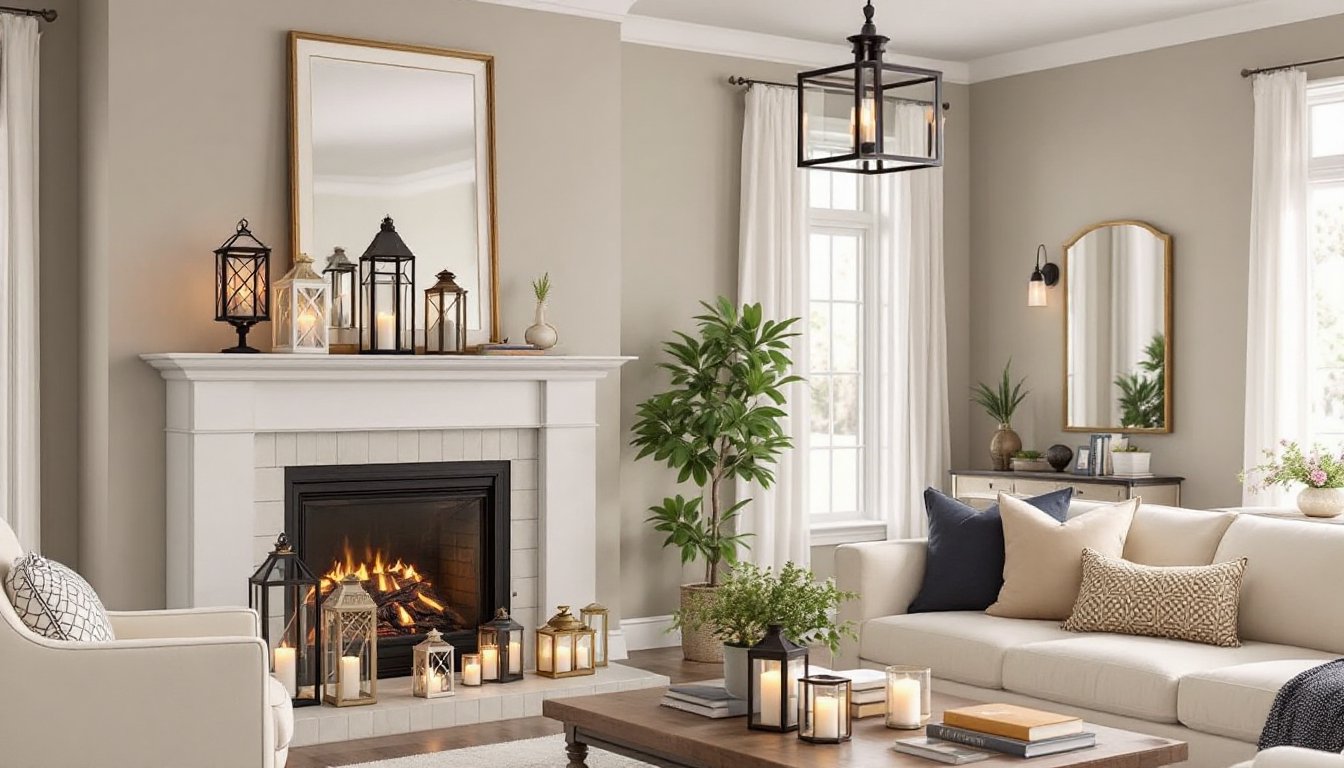
Grouping multiple lanterns of varying heights, sizes, and finishes creates a dramatic focal point that feels intentional rather than haphazard. This approach works particularly well around fireplaces, on deep windowsills, or in alcoves where the cluster can be viewed from multiple angles.
The key to successful clustering is variation with cohesion. Mix lantern heights (8 inches, 14 inches, 20 inches) so the eye travels up and down the group. Vary materials slightly, perhaps one wrought iron, one brass, one white-painted wood, but ensure they share a common color palette or finish style so the cluster reads as intentional rather than mismatched.
Odd-numbered groupings (three, five, or seven lanterns) feel more dynamic and less contrived than even numbers. Arrange them at different depths on a surface rather than in a straight line. A fireplace hearth, console table, or wide shelf becomes a curated display rather than a dusty corner.
Lighting a cluster requires restraint. Too many candles or lights inside every lantern can feel overwhelming: instead, light 50 to 70 percent of them, creating visual interest without excessive brightness. This approach also makes maintenance simpler, swapping out burned-down candles or replacing batteries in some lanterns while leaving others dark maintains the aesthetic.
Seasonal Lantern Styling Tips
Lanterns adapt beautifully to seasonal change, making them ideal for rotating decor throughout the year. This flexibility means a single lantern purchase can serve multiple design iterations.
For spring and summer, fill lanterns with battery-operated string lights or fill the interior with fresh greenery, eucalyptus branches, or even small potted herbs like basil or mint. Pale or whitewashed finishes feel bright and airy in warmer months. Pair them with linen throw pillows or light, neutral-toned decor.
In fall and winter, lanterns become vehicles for seasonal color and warmth. Place pillar candles, LED candles with warm color temperatures (2700K), or even seasonal floral arrangements inside lanterns. Rich jewel tones, deep reds, golds, burgundy, complement the season. Exterior decoration (non-flammable confetti, faux snow, or winter greenery) adds festive appeal.
For year-round consistency, neutral metal finishes (black, bronze, brushed nickel) work across all seasons. Switch only the interior contents or the candle color to reflect the season. This approach minimizes clutter and expense while maximizing visual impact. Lanterns with removable panels make seasonal swaps easier, simply unclip glass or lattice sections and refresh the interior without repositioning the entire fixture.
Conclusion
Lantern decor elevates a living room by combining function, warmth, and visual interest in one accessory. Whether hanging overhead, grounding a corner, anchoring a table, or clustering for impact, lanterns adapt to any space and style. Start with one or two pieces in a size and finish that complement existing furniture and fixtures. Build gradually, layering in additional lanterns as the design evolves. The result is a living room that feels collected, intentional, and inviting, without requiring a full renovation.