Table of Contents
ToggleAs temperatures drop and daylight shrinks, the living room becomes the heart of home life, a refuge for long evenings and weekend gatherings. Fall decor for the living room doesn’t require a major overhaul or expensive renovations. Instead, it’s about layering textures, adjusting lighting, and introducing seasonal colors that make the space feel warm and inviting without looking overdone. Whether someone is refreshing a tired room or simply adding autumn touches, these eight practical strategies transform a living room into a cozy haven that celebrates the season while remaining functional and stylish.
Key Takeaways
- Fall decor for the living room relies on warm color palettes like burnt orange, burgundy, and forest green paired with neutral tones to create authentic autumn ambiance without overwhelming the space.
- Layering textiles such as chunky knit throw blankets, mixed-weight pillows, and properly-sized area rugs is the most effective way to signal coziness and add visual depth to your living room.
- Natural elements like fall branches, gourds, and wood pieces bring seasonal authenticity indoors and cost far less than elaborate decorations while requiring minimal maintenance.
- Switching to warm-toned light bulbs (2700K color temperature) and grouping candles strategically transforms lighting into a critical component of fall ambiance as daylight decreases.
- Subtle furniture rearrangements that pull seating closer together create intimate conversation zones and make the living room feel more inviting during the cooler months.
Warm Color Palettes That Instantly Feel Like Autumn
The fastest way to signal fall in a living room is through color. Warm tones anchor the space and create immediate visual warmth, even before adding textiles or decor. Burnt orange, deep terracotta, rich burgundy, forest green, and warm chocolate brown are the foundation colors that feel authentically autumnal.
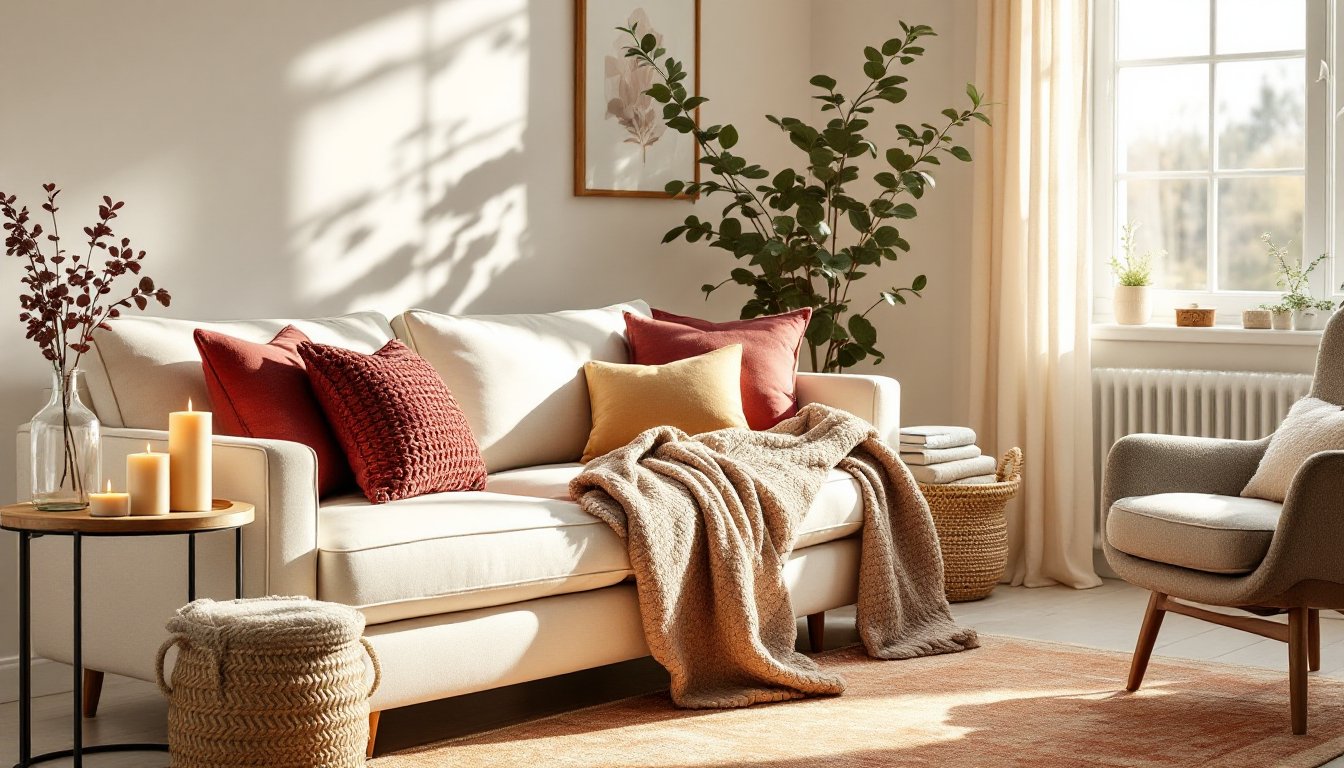
Start by assessing existing furniture. A neutral sofa provides the perfect backdrop for layering warm accent colors through pillows and throws. If the room already has color, choose a secondary wall to paint or use a large area rug to introduce the seasonal palette without overwhelming the space. Warm mustard yellow pairs beautifully with deep reds, while sage green tones down the intensity of orange.
The key is balance. One feature wall or dominant accent color prevents the room from feeling like a pumpkin patch. Pair warm tones with cream, beige, or soft gray to let the eye rest and make the space feel intentional rather than costume-like. Accent pieces, throw pillows, artwork, or a statement rug, can introduce secondary colors without painting or permanent commitment.
Textiles and Layering for Maximum Comfort
Fall decor thrives on texture and layering. Textiles signal coziness more effectively than any decoration, and they’re easily swapped out when winter arrives or spring approaches. The goal is to create visual depth and tactile warmth.
Throw Blankets, Pillows, and Rugs
Throw blankets in chunky knits, wool blends, or faux fur invite relaxation and anchor seating areas. Drape one over the sofa arm or the back of a reading chair where it’s accessible, this signals comfort and function, not decoration. Expect to spend $30–80 on a quality blanket that lasts multiple seasons.
Pillows layer depth quickly. Mix fabric weights: pair a smooth linen pillow with a chunky knit or faux suede option. Vary sizes (18-inch, 20-inch, and 14-inch accent pillows) to avoid visual monotony. A living room sofa can handle four to six pillows without feeling cluttered: arrange them in asymmetrical groupings rather than mirror-image pairs.
Area rugs define zones and add warmth underfoot. A natural wool or polypropylene blend rug in warm tones anchors furniture groupings and makes the room feel intentionally designed. Measure the space before purchasing, ideally, the rug should extend at least 18 inches beyond furniture on all sides, or at minimum anchor the front legs of sofas and chairs. A rug too small fragments the room: one too large overwhelms it.
Natural Elements and Seasonal Greenery
Bringing outdoor elements indoors connects the room to the season and adds life and texture. Real branches, fall foliage, and seasonal botanicals feel more authentic than plastic alternatives and cost less than elaborate floral arrangements.
Fall branches in a tall vase create dramatic vertical interest without blocking sight lines or requiring maintenance. Eucalyptus, bittersweet, and dark burgundy leaves last longer than fresh flowers and cost $5–15 per bunch from grocery store floral departments. Layer branches of varying heights in a clear glass vase (so the stems are visible) or a ceramic vessel that coordinates with wall color.
Gourds and small pumpkins arranged on a console table or bookshelf add harvest aesthetic without being cartoonish. Skip the typical orange variety and choose white pumpkins, pale green gourds, or deep striped varieties for sophistication. Group them in odd numbers (three or five) at varying heights rather than lining them in a row.
Wood elements, reclaimed logs, a wooden box, or woven baskets, echo natural textures and warm the palette. These pieces serve function, too: baskets store throws and pillows, keeping the room organized while adding visual interest. The key is restraint: one or two statement pieces feel curated, while every surface covered reads as cluttered.
Lighting Strategies for Ambiance
As daylight shortens, lighting becomes critical to fall ambiance. A living room needs layered lighting: overhead fixtures for task work, mid-level options like table lamps, and accent lighting like candles or string lights.
Candles and Warm Light Sources
Candles are fall decor’s fastest upgrade. They add warmth, fragrance, and a gathering point without electrical work. Soy or beeswax candles 3–4 inches in diameter burn cleanly and last longer than paraffin versions. Group three to five candles of varying heights on a console table, mantle, or coffee table, never leave them unattended, and keep them away from drafts and flammable materials.
Swap harsh overhead lighting for warm-toned bulbs (2700K color temperature). These bulbs mimic candlelight and create coziness that cool-toned bulbs can’t match. They cost the same as daylight-colored versions and make an immediate difference. If overhead fixtures feel too bright, adding a dimmer switch (about $15–30 in materials and 30 minutes to install, or hire an electrician if uncomfortable with electrical work) gives control without replacing fixtures.
Table lamps with linen shades in cream or warm white soften light and look less utilitarian than bare bulbs. Position them on end tables near seating for functional reading light that still feels ambient. String lights, cool only if using warm-toned versions, can outline a bookshelf or window without feeling juvenile when chosen carefully.
Furniture and Layout Adjustments
Seasonal decor includes subtle furniture shifts that invite lingering and conversation. Fall layouts center around coziness rather than formal arrangement.
Pull seating closer together to create intimate conversation zones. A living room furniture grouping that works for summer spacing might feel disconnected in fall: shifting a chair or angling a sofa a few degrees creates a huddle-worthy arrangement. This also makes the space feel larger by opening up unused corners.
Clear surfaces and add intentional styling. Remove summer decor, excess books, and device clutter. A styled coffee table with a small plant, a candle, and a stack of two or three books (spines aligned or arranged at slight angles) looks curated without being sterile. Living rooms double as entertainment spaces, work-from-home offices, and relaxation zones: seasonal styling shouldn’t interfere with actual use.
Add a reading corner if space allows. A single chair, a small side table, and a basket of blankets define a quiet zone that invites longer stays. Even in modest living rooms, angling a chair toward a window with good natural light creates a functional retreat.
Consider traffic flow. Rearranging furniture for fall shouldn’t create obstacles or make reaching the kitchen awkward. Test layouts before committing: move things back if the new arrangement impedes function.