Table of Contents
ToggleEmerald green has moved from boutique design circles into mainstream home décor, and for good reason. This rich, jewel-toned hue brings sophistication and calm to any living room without the stuffiness of formal design. Unlike trendy colors that fade fast, emerald green works across contemporary, traditional, and eclectic styles, it’s a timeless choice that’s having a major moment right now. Whether someone wants a bold accent wall or subtle touches of color, emerald green offers flexibility and depth that neutral palettes often lack. The key is understanding how to carry out it thoughtfully, pairing it with the right materials, lighting, and complementary décor so the space feels intentional rather than random.
Key Takeaways
- Emerald green living room ideas offer a timeless, sophisticated alternative to neutral palettes that works across contemporary, traditional, and eclectic design styles.
- Start with a single accent wall behind furniture or opposite the entryway, using quality primer and at least two coats of paint for even coverage of this bold jewel tone.
- Pair emerald green with warm neutrals (cream, warm gray, taupe) and warm metallics (brass, gold) to enhance the color’s richness without visual clashing.
- Choose warm white bulbs (2700K) and layer multiple light sources to prevent emerald from appearing flat or cave-like, since the color shifts dramatically under different lighting conditions.
- In small living rooms, limit emerald green to one accent wall or furniture piece, and use mirrors and reflective surfaces to bounce light and create depth.
- Complement emerald with jewel-tone textiles (navy, burgundy, purple) or botanical palettes (sage green, rust, natural wood) for cohesive, sophisticated design without overwhelming the space.
Why Emerald Green Works in Modern Living Rooms
Emerald green occupies a sweet spot between bold and livable. It’s darker and more sophisticated than mint or seafoam, yet it’s not so heavy that it makes a room feel cramped or cave-like. This balance comes from the color’s undertones, true emerald contains both blue and yellow, creating visual warmth and depth.
The color also performs exceptionally well under different lighting conditions. In natural daylight, it appears vibrant and jewel-like. Under warm incandescent or LED lighting, it deepens into a more intimate, luxurious tone. This adaptability makes emerald green forgiving for living rooms, which typically have mixed lighting sources throughout the day.
Psychologically, emerald green is associated with growth, balance, and renewal, qualities homeowners want in a space where they spend leisure time. It’s restful without being boring, making it ideal for a living room that needs to feel both inviting and composed.
Accent Wall Strategies for Maximum Impact
An accent wall is the fastest way to introduce emerald green without overwhelming the space. Before picking up a paintbrush, measure the wall and purchase the correct amount of paint, high-quality paint covers about 350–400 square feet per gallon, but that varies by paint type and surface texture.
For maximum impact, choose the wall that draws the eye naturally when entering the room. Often this is the wall opposite the entryway or the one behind a sofa. Avoid painting the wall with the largest window, since natural light will hit it unevenly and change the color throughout the day, unless that’s the intentional effect.
Prep work is non-negotiable. Clean the wall, patch any holes or cracks with spackle, sand smooth when dry, and prime with a quality primer. Use painter’s tape along trim and ceiling to avoid sloppy edges. A dense, high-quality brush (angled 2-inch) works better than a cheap synthetic one for emerald green: dark colors show bristle marks more easily.
Consider semi-gloss or satin finishes instead of flat. They reflect light subtly, making the emerald appear more luxurious and are easier to clean if the wall catches spills or dust. Flat finishes look more matte but hide imperfections better, a trade-off worth weighing based on the wall’s condition.
Many DIYers underestimate the second coat: emerald green almost always requires two coats for even coverage, sometimes three depending on the base color and paint quality.
Furniture and Decor Pairing Tips
Once the wall is painted, the fun part, filling the room without clashing. Emerald green is a bold anchor, so furniture should complement rather than compete.
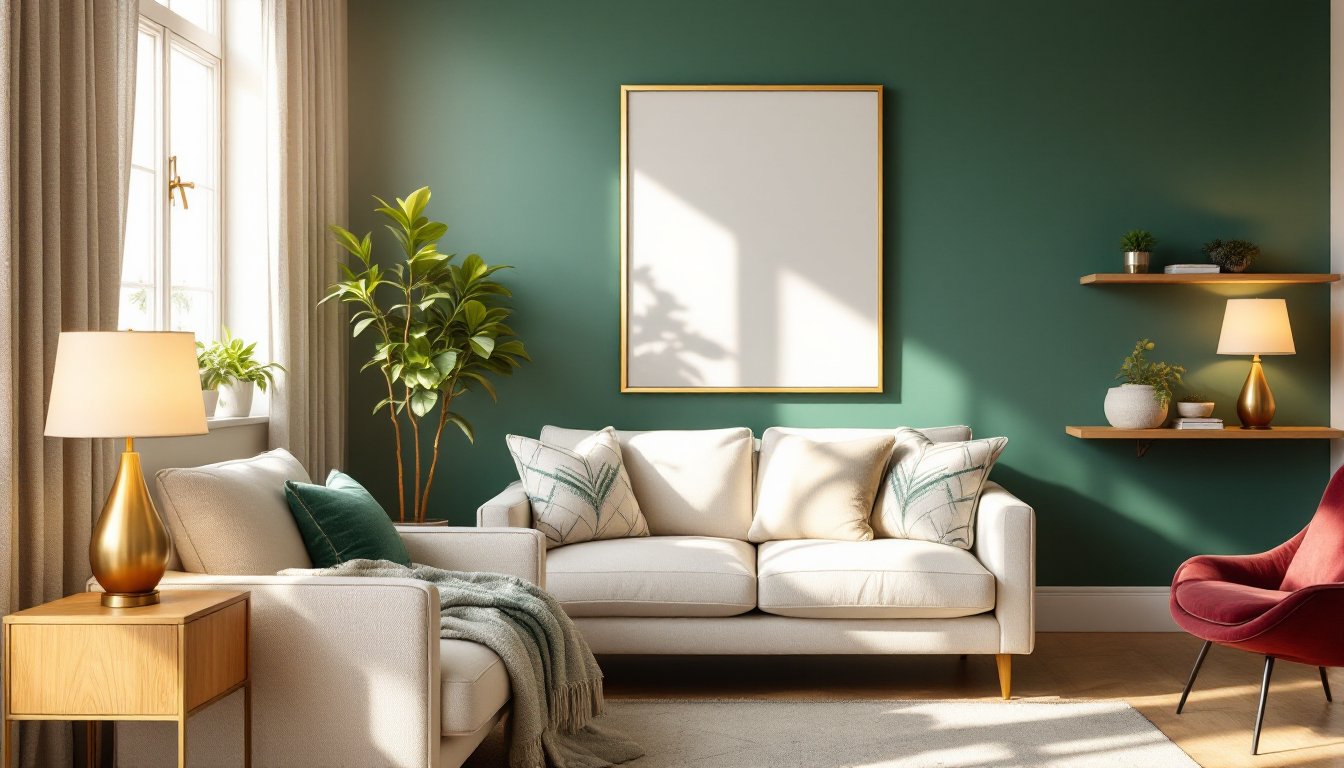
Neutrals like cream, warm gray, and soft taupe act as breathing room. A cream sofa against an emerald accent wall creates high contrast without visual chaos. Warm grays pair beautifully if the room has cool-toned lighting: they echo the blue undertones in the green. Avoid stark white if possible, it can feel clinical next to a saturated color.
Wood furniture in honey, walnut, or mid-tone oak tones warm up the space and add natural texture. Brass or warm gold metallics (picture frames, lamps, mirrors) enhance the jewel-tone quality of emerald, while chrome or cool silver can make it feel slightly cold, though silver works if balanced with warm textiles.
For textiles, layer in smaller accent colors: deep jewel tones (navy, burgundy, deep purple) echo emerald without repeating it. Patterned pillows that weave together emerald, cream, and gold create visual interest without overwhelming. Linen, velvet, and wool add tactile richness that complements the sophisticated color.
Complementary Color Palettes
There are several proven palettes that work with emerald green. The jewel-tone palette pairs emerald with sapphire blue, amethyst purple, and ruby red, bold but cohesive if items are varied in size and placement. The warm neutral palette combines emerald with cream, warm gray, and caramel wood, feeling more understated and timeless.
The botanical palette pulls in sage green, cream, natural wood, and touches of rust or terracotta, inspired by natural plant combinations. This approach softens emerald’s boldness and works well in rooms with plants or natural textiles. The gold and emerald palette emphasizes warm metallics, ivory, and rich wood, evoking classic luxury without feeling stuffy.
Lighting to Enhance Emerald Tones
Lighting can make or break how emerald green appears in a living room. The color shifts noticeably under different bulb temperatures, so intentional lighting choices matter.
Warm white bulbs (2700K) are the safest bet for living rooms with emerald green. They enhance the richness of the color and create an inviting, intimate atmosphere. If using track lights or recessed fixtures, confirm the bulb temperature before installation, some fixtures ship with cool-white bulbs (5000K+) that’ll make emerald look flat or bluish.
Avoid cool-white fluorescent or harsh LED bulbs. They drain emerald of warmth and can make a sophisticated space feel clinical. If existing overhead fixtures use cool-white, consider adding a table or floor lamp with warm-white bulbs to balance the light in the room.
Natural light deserves attention too. If the room has south-facing windows, emerald will appear brighter and slightly more blue during midday. East- or west-facing rooms show the color warmer in morning and afternoon light respectively. North-facing rooms show emerald’s true tone consistently, without drastic shifts. This doesn’t mean avoiding north-facing rooms, many designers prefer the consistent appearance, but it’s worth noting when touring homes in different seasons.
Layering lighting is key: combine overhead fixtures with task lamps, floor lamps, and wall sconces. This flexibility lets someone adjust the mood and counteract harsh daylight when needed.
Styling Small Spaces With Emerald Green
Emerald green in a small living room requires restraint to avoid making the space feel boxed in. The color absorbs light, so applying it everywhere will shrink the perceived square footage.
Keep emerald to one accent wall or even half a wall (a feature halfway up the wall, with neutral color above). This approach gives the color presence without visual overload. If an accent wall feels risky, try emerald in a large furniture piece, a sectional or armchair in emerald with neutral walls on the perimeter is an easy swap if the color doesn’t work out.
Mirrors and reflective surfaces are essential in small rooms with emerald green. A large mirror or mirrored console opposite the emerald wall bounces light around and creates depth. Keep walls other than the accent wall a light neutral to maximize this reflection.
Vertical storage and floating shelves help small rooms feel airy. Dark shelving can ground the space, but keep shelves uncluttered, too many objects on emerald-green walls create visual heaviness. Group items in threes or fives rather than scattering singles everywhere.
Lighting becomes even more critical in small spaces. Multiple light sources prevent the room from feeling dark or cave-like when emerald green is present. Aim for at least one overhead fixture, one floor or table lamp, and one accent light (wall sconce or under-shelf lighting on shelves) to keep things bright and balanced.
Conclusion
Emerald green living rooms are achievable for any DIYer willing to do basic prep work and think through color pairing and lighting. Start with an accent wall if unsure, it’s reversible and makes the biggest impact for the effort. Choose warm white lighting, pair the color with neutrals or complementary jewel tones, and don’t skip prep work or primer. The result is a sophisticated space that feels intentional and timeless, not trendy or forced. With thoughtful execution, emerald green transforms an ordinary living room into a sanctuary worth spending time in.