Table of Contents
ToggleA living room designed for kids doesn’t mean sacrificing style or durability, it means making smart choices from the start. Parents often struggle to balance a functional family space with one that looks intentional rather than overrun by toys and plastic. The good news: thoughtful furniture selection, strategic storage, and careful planning can transform a living room into a space where kids thrive and adults actually want to spend time. This guide walks through practical kid-friendly living room ideas that prioritize safety, withstand daily wear, and grow alongside the family.
Key Takeaways
- Kid-friendly living room ideas prioritize durable, performance fabrics and solid wood furniture with removable, washable covers to withstand spills, jumping, and daily wear.
- Smart storage solutions like labeled toy bins, built-in shelving at kid height, and under-sofa drawers transform clutter into an organized, functional space.
- Neutral base colors with one accent wall and machine-washable textiles create a timeless design that grows with your children without constant redecorating.
- A dedicated play zone defined by a rug or low furniture boundary keeps mess contained while encouraging independent cleanup and creative activities.
- Layered lighting with dimmable LED bulbs and task lamps improves safety, prevents hazards, and sets the mood for both active play and family relaxation.
- Invest in quality seating, rounded furniture edges, and proper anchoring of tall shelves to prioritize safety while creating a comfortable space where both kids and parents enjoy spending time together.
Choose Durable, Low-Maintenance Furniture
Kids are tough on furniture. Before picking anything for seating or surfaces, think about real-world use: spills, jumping, climbing, and the occasional marker experiment.
Opt for performance fabrics like solution-dyed polyester, microfiber, or crypton-treated upholstery. These resist staining far better than natural fabrics and can handle repeated cleanings. Avoid light linens and delicate weaves unless covered by washable slipcovers.
Solid wood frames outlast particleboard. Look for sofas and chairs with hardwood frames (oak, birch, or maple) and check that joints are doweled or corner-blocked, not stapled. A well-built sectional or sofa with a removable, washable cushion cover is worth the investment.
Recessed legs or feet prevent dust traps and make vacuuming easier. Avoid pieces with open bases full of hard-to-reach nooks where crumbs hide.
Coffee tables and end tables should be sturdy and, ideally, have rounded or padded edges. Glass tops are beautiful but risky: opt for solid wood, metal, or high-pressure laminate. Nesting tables save space when toys multiply.
Storage ottomans or benches do double duty: seating plus hidden toy storage. Make sure hinges are slow-closing to prevent finger pinching.
Organize Toys And Clutter With Smart Storage Solutions
Toy clutter snowballs fast. The difference between a chaotic room and a functional one is often just having a clear home for every item.
Built-in shelving is ideal if you’re willing to install it. Wall-mounted cubbies or shelves at kid height (36–48 inches high) encourage kids to return toys independently. Use brackets rated for at least 100 pounds per shelf if toys and books will be heavy. Anchor tall shelving to wall studs to prevent tipping, this is a safety essential, not optional.
Toy bins with labels (picture and word labels work best for non-readers) make cleanup a game rather than a chore. Use opaque bins so clutter stays hidden: clear bins show mess. Rotate bins seasonally to keep the selection fresh and manageable.
Under-sofa storage drawers capture dead space. Measure depth carefully, typically 6–8 inches fits under standard couches. These work well for blankets, seasonal items, or less-used toys.
Wall-mounted pegboards or hooks hold bags, hats, and light jackets off the floor. Install at 36–48 inches high so kids can reach without climbing.
Baskets and woven storage add texture while corralling items quickly. Choose sturdy woven baskets (seagrass or rattan) over flimsy fabric ones: they last years instead of months.
Pick Kid-Safe Colors And Patterns That Grow With Your Family
Color choices should feel energizing without overwhelming, and they should remain relevant as tastes change.
Soft, neutral base colors (warm white, soft gray, pale beige) create a calm backdrop and let decor change easily. Paint walls in a low-VOC or zero-VOC paint to avoid off-gassing in a space where kids spend hours. Plan for at least two coats: better coverage means durability and easier touch-ups.
One accent wall in a gentle color, soft sage, warm gray-blue, or buttery yellow, adds visual interest without jarring the senses. Avoid neon or overly saturated colors that exhaust the eyes.
Patterns through decor, not walls age better than trendy wallpaper. Colorful pillows, throws, and artwork can be swapped as kids grow. If you do choose wallpaper, pick wipeable, scrubbable finishes rated for high-traffic areas.
Mix warm and cool tones in furnishings so the room doesn’t feel flat. A warm wood credenza with cool-gray seating creates depth. Avoid all pastels or all primary colors, balance feels more mature and adapts as kids age.
Rugs and textiles introduce color safely. A geometric or solid rug in a mid-tone hides wear better than light colors and ties the space together. Choose machine-washable options when possible.
Design A Play Zone That Encourages Creativity
Dedicating a specific area for active play keeps mess contained and gives kids autonomy.
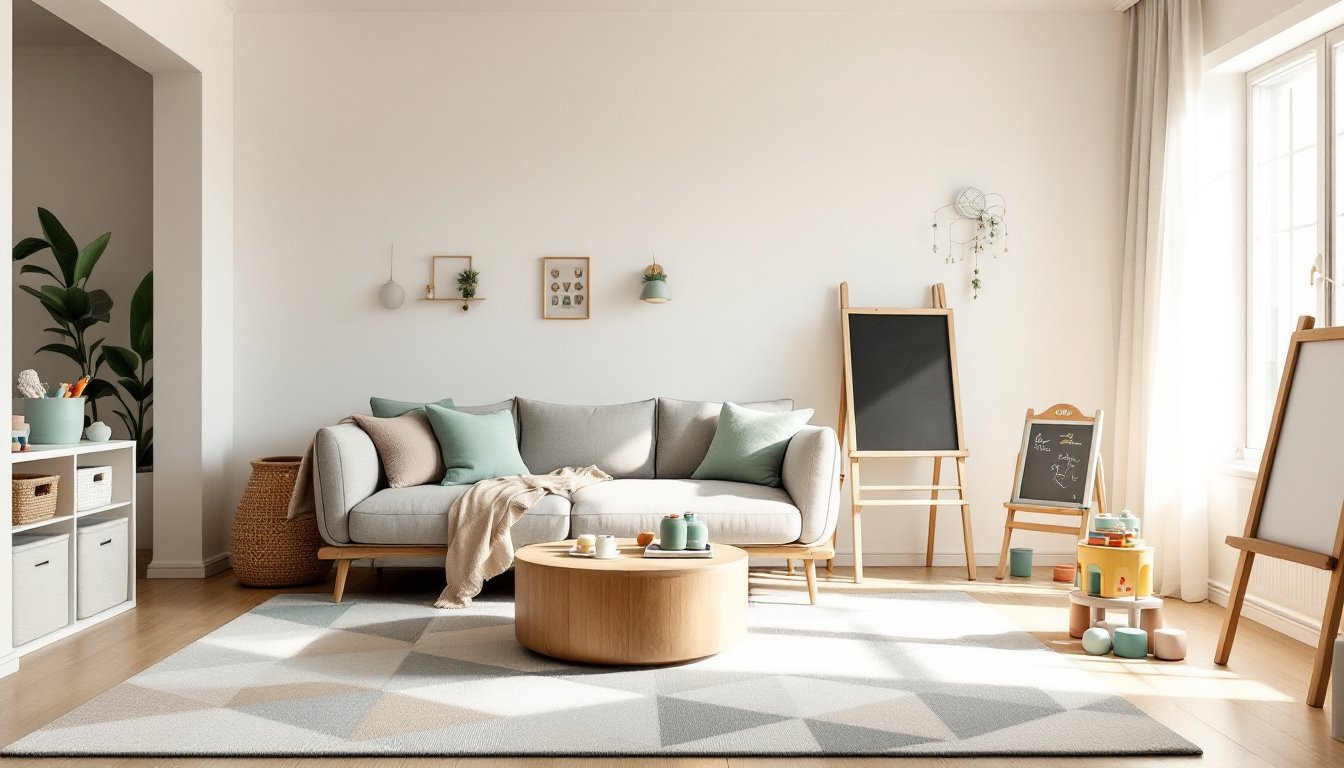
Define the zone with a rug or low furniture boundary. This signals to kids that play happens here. A 5×7 or 5×8 foot area rug works well in medium living rooms: anything smaller feels cramped, anything larger dominates the space.
Include low shelving or a toy kitchen within the play zone so materials stay accessible. Open shelving with labeled bins encourages independent cleanup because kids can see what’s stored where.
Add a small table and chairs sized for young kids (typically 18–24 inches high for ages 3–6, 24–30 inches for older children). This anchors the play zone and gives a dedicated space for art, building, or games.
Soft mats or foam play tiles under the play zone reduce noise and provide cushioning. Interlocking foam tiles work well: they’re easy to clean and can be arranged or removed as the play zone evolves.
Wall-mounted art easel or chalkboard keeps one creative activity organized without adding bulky furniture. Mount at kid height so they reach comfortably without climbing.
Set boundaries clearly. Use a gate, open shelving as a visual boundary, or simply communicate that toys stay in the zone. Consistency makes it stick.
Install Proper Lighting For Safety And Ambiance
Lighting affects both safety and mood. Poor lighting hides hazards: good lighting makes the room inviting without glare.
Layer lighting with ceiling fixtures, table lamps, and wall sconces. A single overhead light feels harsh: three light sources at different heights feel balanced and let you adjust brightness for different times of day.
Use dimmable LED bulbs (warm white, 2700K color temperature) in overhead fixtures and lamps. Dimmers let you brighten the room for active play and dim it for calm time. LEDs last longer than incandescent bulbs and run cooler.
Avoid open bulbs or low-hanging fixtures where kids might hit their heads. Pendant lights should hang at least 7 feet high: choose ones with shatter-resistant bulbs or enclosed shades.
Add task lighting (desk lamp or reading light) near the play zone and seating areas. This prevents eye strain and makes art projects and reading safer.
Night lights in neutral areas (entry, hallway) help kids navigate safely at night. Choose soft warm tones rather than bright colors that disrupt sleep.
Check for glare on screens or reflective surfaces. Reposition lamps or add diffusers if needed. Good lighting makes the room safer and more usable.
Add Comfort And Coziness With Rugs And Seating
A living room should feel like a place where the family actually settles in together.
Area rugs anchor the space and define zones. Choose a rug that’s large enough so front legs of furniture sit on it (not just perching at the edge). A 5×8 or 6×9 foot rug works for most family living rooms. Look for rugs with dense, low pile (less than 0.5 inches) that resist matting and hide crumbs.
Performance rugs made from polypropylene or solution-dyed wool handle spills and stains better than traditional wool. Many are machine-washable or treatable with stain guard.
Layering seating options gives flexibility. A large sofa, paired with a comfortable armchair or two, lets parents supervise play while sitting. Bean bags or floor cushions give kids their own cozy spot without taking up much room.
Throw blankets and pillows in washable covers add warmth and let kids nestle in while watching a movie or reading. Avoid small decorative pillows that create choking hazards for young children: choose larger, structural pillows.
Ottomans or poufs work as extra seating, footrests, or quick toy storage. Upholstered versions in performance fabric hide wear well.
Lighting near seating (floor lamp, wall sconce) makes the area feel intentional and lets family members read or play board games comfortably.
Conclusion
A kid-friendly living room doesn’t require gut renovations or expensive custom furniture. It comes down to choosing durable materials, planning storage upfront, and creating zones that work for both play and family time. Invest in a quality sofa, add smart storage, and pick a neutral color palette, then let textiles and decor do the heavy lifting. Built thoughtfully, this room will serve your family for years and adapt as kids grow. The goal is a space where kids thrive and parents actually relax.