Table of Contents
ToggleA small living room doesn’t have to feel cramped. Whether it’s a studio apartment, a starter home, or just an undersized space, homeowners can transform how a room feels with smart design choices and strategic DIY projects. The trick isn’t knocking down walls, it’s creating the illusion of openness using light, reflection, and thoughtful furniture placement. Most of these tactics require minimal investment and no special skills. Here are seven proven strategies that help any small living room breathe.
Key Takeaways
- Light colors and minimal visual clutter make a small living room appear larger and more spacious by bouncing light and reducing visual noise.
- Strategically placing large mirrors opposite or adjacent to windows amplifies natural light and creates the illusion of depth.
- Furniture arrangement and scale are critical—float pieces away from walls, choose low-profile furniture with visible legs, and avoid oversized sectionals that consume visual real estate.
- Layered artificial lighting with wall sconces, table lamps, and recessed fixtures eliminates shadows and makes rooms feel more open than single overhead fixtures.
- Vertical storage solutions like floating shelves and floor-to-ceiling curtains draw the eye upward, making ceilings feel higher and improving how a small living room breathes.
- Textures, depth tricks, and perspective lines create visual complexity that reduces monotony and tricks the eye into perceiving more space than actually exists.
Choose Light Colors And Minimize Visual Clutter
Paint and wall color set the tone for spatial perception. Light colors, whites, soft grays, pale yellows, and warm creams, bounce light around the room and create an airy feel. Darker walls absorb light and make spaces feel more confined. A fresh coat of white or light neutral trim paint costs $30–60 per gallon and covers roughly 350–400 square feet per gallon. For walls, one gallon covers approximately 350 square feet with good coverage in two coats on unprimed drywall.
Beyond paint, declutter ruthlessly. Every item on display, books stacked on the floor, throw pillows piled on the sofa, decorative objects crowded on shelves, competes for visual attention and shrinks the space mentally. Keep surfaces mostly clear: store items in closed storage, donate what isn’t used regularly, and display only a few meaningful pieces. This isn’t about sterility: it’s about preventing visual noise that makes a room feel cramped. Remove wall-mounted shelves that aren’t essential, and if keeping décor, group items rather than scattering them.
Use Mirrors And Reflective Surfaces Strategically
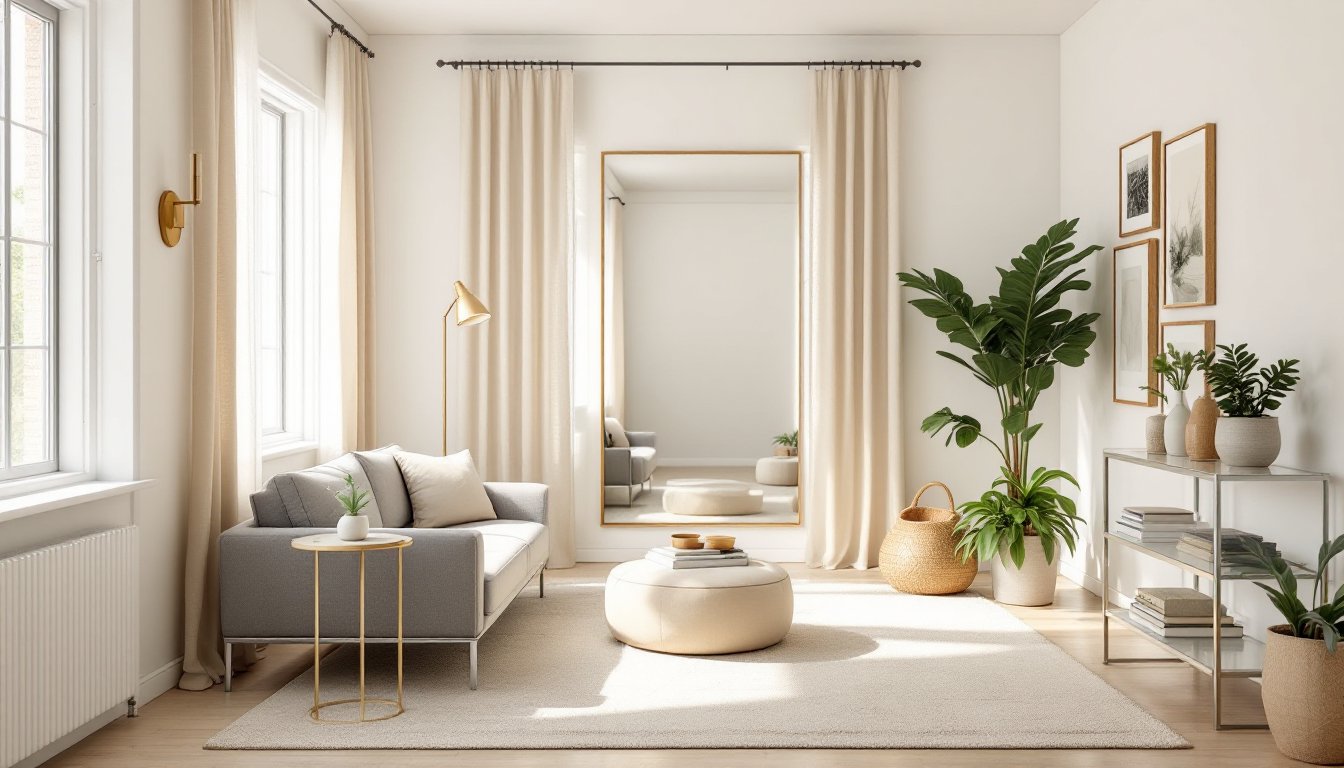
Mirrors are the small-space decorator’s secret weapon. Positioned opposite or adjacent to windows, a mirror reflects natural light back into the room, amplifying brightness and the sense of depth. Avoid tiny decorative mirrors: choose a large statement mirror, 36 inches or larger, hung at eye level (57–60 inches from floor to center). A floor-to-ceiling mirror along one wall is even more effective, though it requires a secure wall mount (use heavy-duty mirror hangers rated for 50+ pounds).
Reflective surfaces beyond mirrors help too. Glossy paint finishes, metallic accents, glass tabletops, and light-colored ceramics all bounce light around. A glass coffee table (roughly $100–300) keeps sightlines clear because legs are visible underneath, unlike a solid wooden table that appears heavier. Stainless steel lamp bases, chrome hardware, and even framed artwork with glass fronts contribute to the effect. Layer these reflective materials subtly rather than overwhelming the space.
Optimize Furniture Placement And Scale
Furniture arrangement makes or breaks a small room. Push pieces away from walls, this counterintuitive move actually makes the space feel larger by defining a conversational zone and opening up wall perimeter. Float a sofa 12–18 inches from the wall and angle chairs to face it. Avoid blocking windows or doorways, which naturally draw the eye and signal openness.
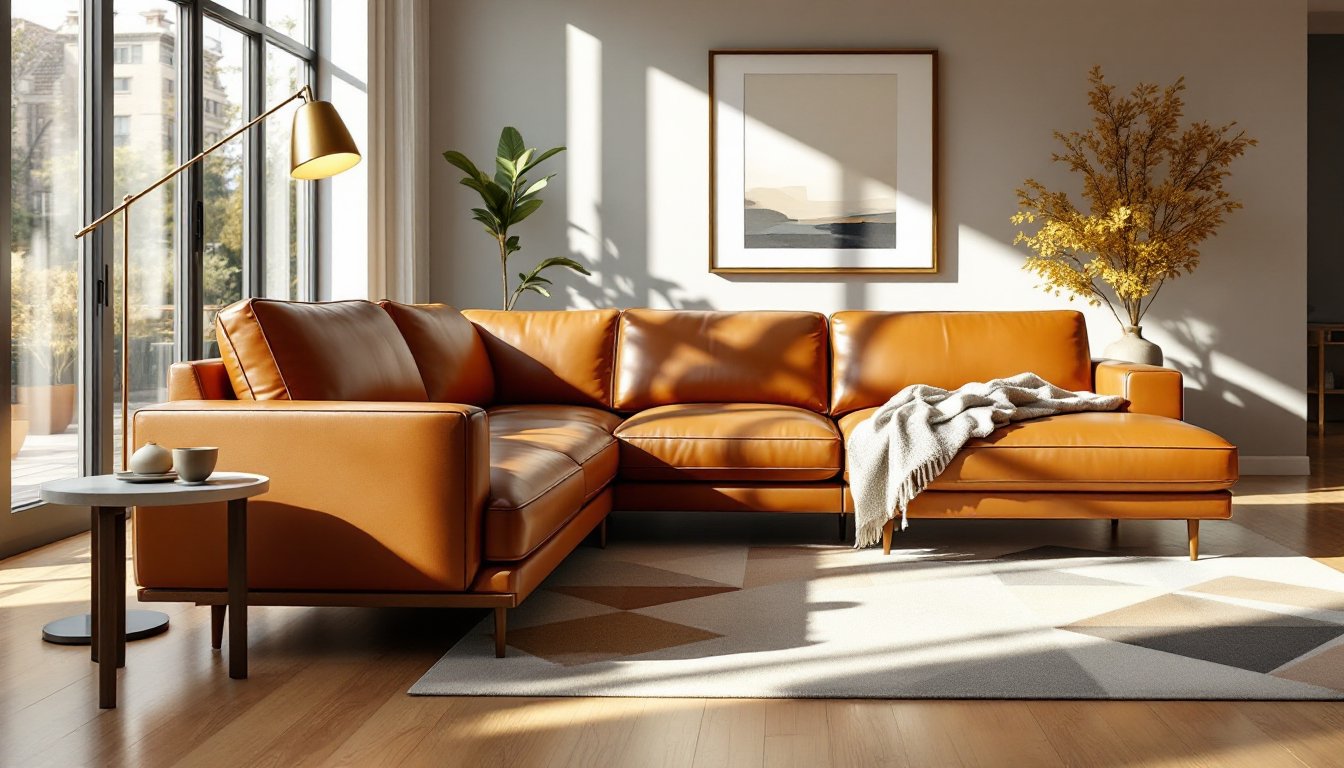
Scale matters enormously. Oversized sectionals and bulky media consoles devour visual real estate. Instead, choose low-profile pieces with visible legs, a sofa with exposed wooden or metal feet looks lighter than one that sits directly on the floor. A slim console table (24–30 inches deep) behind a sofa creates extra surface without bulk. Replace a heavy ottoman with a lightweight round pouf (20–24 inches diameter, $40–80) that tucks away and doubles as seating. Vertical furniture, tall bookcases instead of wide dressers, draws the eye upward and makes ceilings feel higher. Measure your space before buying anything: a sofa that looks fine in a showroom may dwarf a 10-by-12-foot living room.
Enhance Lighting To Create Openness
Lighting transforms perception of space instantly. Dim corners and shadowy areas make rooms feel smaller and closed-in. Maximize natural light by keeping windows unobstructed, swap heavy drapes for sheer curtains or lightweight roller shades that filter light without blocking it. If privacy is needed, a thin linen curtain ($20–40 per panel) diffuses light while maintaining a view.
For artificial lighting, avoid single overhead fixtures. Layered lighting, a combination of recessed ceiling lights, wall-mounted sconces, and table lamps, distributes light evenly and eliminates shadows. LED bulbs (9–15 watts equivalent to 60–100W incandescent) are energy-efficient and come in warm (2700K) or neutral white (3000–4000K). Neutral whites feel fresher and more spacious than warm amber tones. Add a floor lamp ($40–100) in a dark corner and a table lamp on a side table to brighten seating areas. Don’t cheap out on fixtures: a poorly designed lamp looks cluttered. Choose clean-lined designs that complement your décor.
Incorporate Vertical Storage And Design Elements
Small rooms need smart storage that doesn’t consume floor space. Install wall-mounted shelving (16–24 inches deep) for books, decorative items, and storage baskets. Floating shelves ($15–30 each, plus $10–20 in hardware) create the illusion of lightness compared to heavy bookcases. Ensure your wall is solid: locate studs with a stud finder ($15–30) and use toggle bolts or lag anchors rated for the shelf’s weight plus contents.
Vert ical design elements, tall mirrors, floor-to-ceiling curtains, and vertical artwork, draw the eye upward, making ceilings feel higher and rooms feel bigger. A gallery wall arranged in a tall column shape rather than a horizontal line stretches visual space. Hang curtains from ceiling to floor, not just above the window frame, to elongate walls. Corner shelving maximizes dead space and reduces the visual weight of corners. Keep stored items organized and visible (attractive baskets, labeled bins) rather than chaotic, or they’ll feel like clutter.
Add Depth With Layering And Perspective
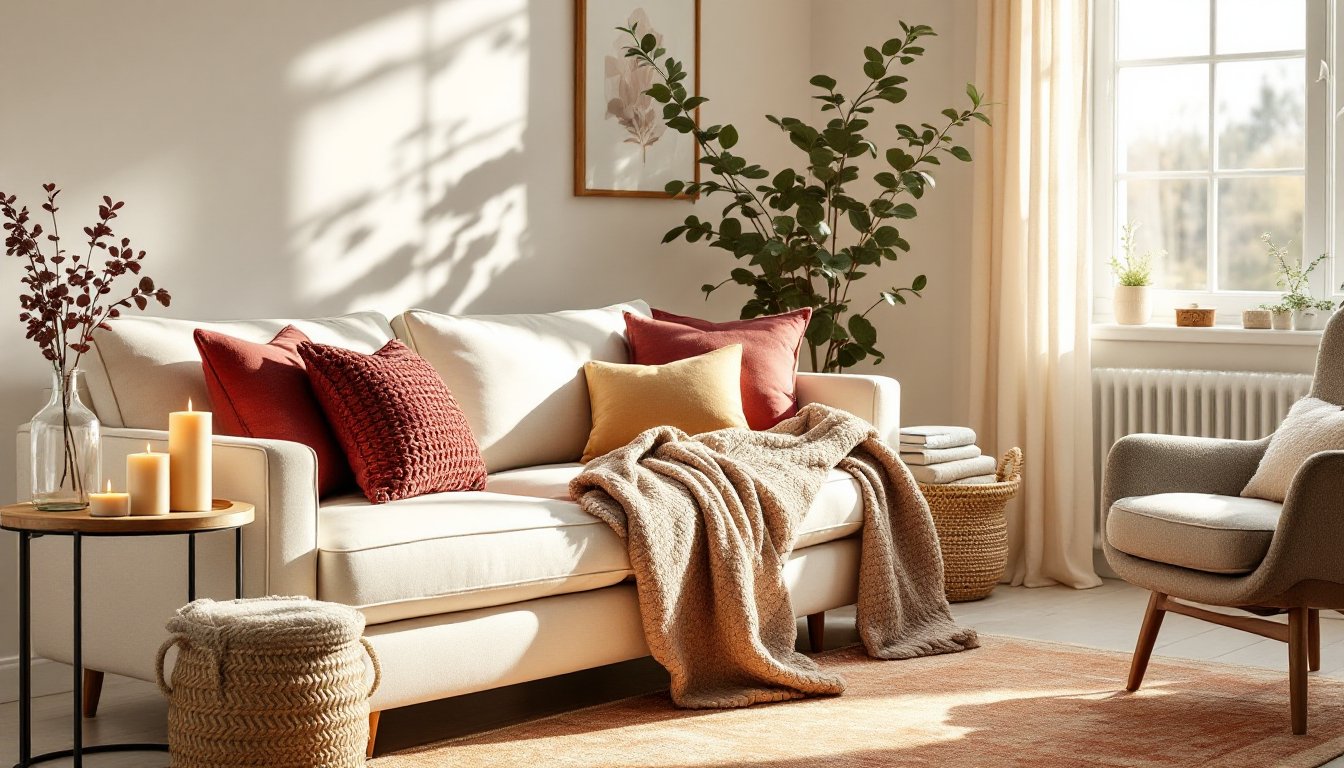
Depth tricks the eye into perceiving more space than actually exists. Layering different textures and tones creates visual complexity and reduces the monotony that small spaces can feel. Combine a light neutral wall with a textured area rug (5-by-7 feet is ideal for defining a living room zone without overwhelming the space: prices range $60–200). Layer throw blankets, cushions in varying shades and fabrics, and artwork to add visual interest without clutter.
Perspective tricks work too. Arrange furniture and décor to create lines that lead the eye deeper into the room, a bookshelf, artwork, or furniture arrangement that recedes visually suggests more space beyond. Hang artwork at varying heights rather than in a perfectly straight line: asymmetry feels more spacious and intentional. Photographs or artwork with depth (landscapes, architectural scenes) pull the viewer’s gaze inward. Avoid patterns that fight each other: one patterned area rug plus patterned throw pillows is enough. The goal is layered sophistication, not visual chaos.
Conclusion
Enlarging a small living room on a budget comes down to smart choices about light, reflection, proportion, and visual flow. None of these tactics require professional installation or expensive renovations. Paint a wall, hang a mirror, rearrange furniture, and add layered lighting, these are projects any homeowner can tackle in a weekend. The payoff is a room that feels open, intentional, and genuinely livable. Start with one or two changes and build from there, observing how light and sightlines shift with each adjustment.