Table of Contents
ToggleLiving room corners often feel like wasted space, those dead zones that gather clutter or stare back empty. But they’re actually prime real estate for smart, functional design. Whether someone’s working with a tight apartment or a sprawling family room, thoughtful corner projects can turn underused areas into destinations worth sitting in. This guide covers six practical ideas that range from simple styling to modest DIY builds, all designed to make corners work harder without requiring major construction or professional installation.
Key Takeaways
- A reading nook anchored by a comfortable mid-century accent chair or papasan chair paired with a slim side table and adjustable floor lamp transforms a living room corner into an intentional, cozy retreat.
- Vertical plant displays using tiered stands, floating shelves, or wall-mounted planters maximize corner space while improving air quality and require minimal floor footprint investment ($40–$150).
- A compact corner office with a wall-mounted desk (30 inches high, 12 inches deep minimum) and narrow overhead shelving enables remote work without sacrificing living room aesthetics or functionality.
- A media corner wall-mounted TV (48–60 inches from the floor) paired with angled compact seating and ambient LED lighting creates an entertainment zone that preserves sightlines and traffic flow.
- Floating shelves installed 12–16 inches apart in a staggered arrangement with thoughtfully curated odd-numbered décor items and large-scale wall art turns a corner display into a designed focal point.
- Corner projects succeed when furniture is right-sized, lighting is dedicated, and the space serves a genuine purpose—avoid filling corners just for the sake of it.
Create A Reading Nook With Comfortable Seating
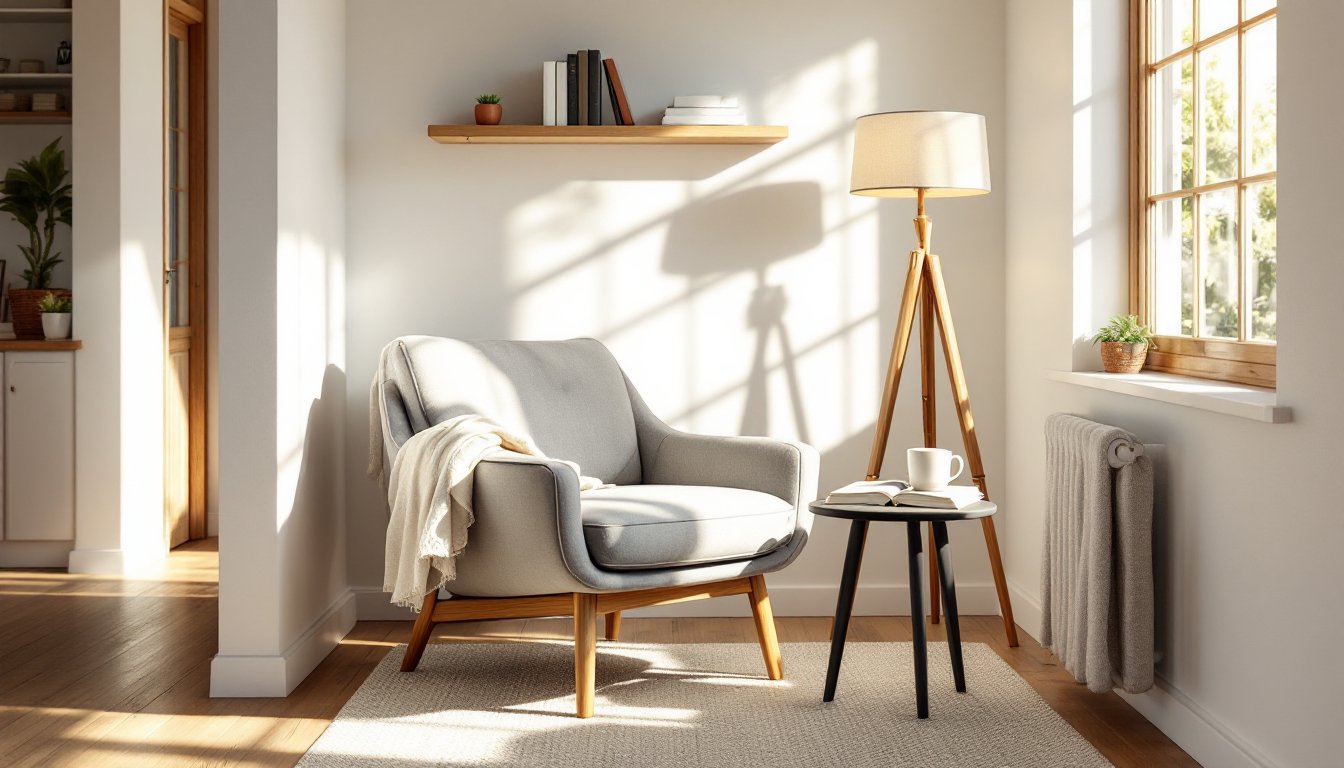
A reading nook is perhaps the easiest way to claim a corner and give it genuine purpose. Start with a comfortable chair or oversized floor cushion, this is the anchor. A mid-century accent chair with wooden legs works well in corners because legs take up less floor space than a full skirt base. Alternatively, a papasan chair (18–20 inches deeper than it is tall) angles nicely into tight corners and reads as intentional rather than crammed.
Layer in a small side table (18 to 24 inches wide, maximum) to hold a lamp, water, or an open book. Avoid tables that stick out into the room traffic. A slim C-shaped table or a narrow console adapted as a side table keeps the footprint tight. Lighting matters, a dedicated adjustable floor lamp beats relying on overhead fixtures. Look for tripod-base lamps that pivot: they’re stable and don’t need to sit flush against a wall.
Complete the vibe with soft textiles. A throw blanket in natural cotton or linen signals “this is a cozy spot,” and a small area rug (4 feet by 6 feet or smaller) defines the nook within the larger room. Add an open floating shelf above the chair for books or a narrow wall-mounted magazine rack at arm’s reach. The goal is comfort and accessibility, someone should be able to sit down and grab a book without getting up.
Install A Vertical Garden Or Plant Display
Corners collect dust but they can also collect greenery. A vertical plant wall transforms dead space into living décor and improves air quality at the same time. The simplest approach is a tiered plant stand, typically three shelves, 3 to 4 feet tall, occupying less than 2 square feet of floor space. Metal or wood stands work: choose what matches existing furniture. Stock it with low-light tolerant plants: pothos, snake plants, and ZZ plants thrive in corners that don’t get direct sun.
For a more permanent solution, mount floating shelves on the wall in a staggered pattern, one shelf 30 inches from the floor, another at 48 inches, another at 66 inches. Space them 12 to 18 inches apart horizontally. Use appropriate wall anchors (toggle bolts for drywall, concrete anchors for masonry) rated for at least 25 pounds each if holding heavy planters. Keep shelves shallow, 6 to 8 inches deep, so they don’t jut out awkwardly.
Alternatively, hang a macramé plant hanger or wall-mounted pocket planters directly on the wall. These take zero floor space and create vertical interest. Ensure the wall gets adequate light: even low-light plants need some ambient brightness. If the corner is truly dark, consider a small LED grow light mounted above the display. Cost-wise, a tiered stand runs $40–$120: wall shelves with anchors add $60–$150. Plants themselves are inexpensive compared to furniture.
Design A Compact Home Office Or Work Station
Remote work isn’t going away, and a small corner desk setup beats working from the couch. A corner desk, specifically designed to fit two walls, maximizes surface area in a tight footprint. Standard dimensions are 47 to 60 inches along the wall and 24 inches deep. This gives enough real estate for a laptop, monitor, and a few inches for a coffee mug.
If a corner desk doesn’t fit the room’s layout, a floating wall-mounted desk works just as well. Mount it 30 inches from the floor (standard desk height) using heavy-duty brackets rated for 100+ pounds. Confirm wall studs are 16 inches on center and screw brackets directly into studs: don’t rely on anchors alone for a workspace under daily load. A 36-inch-wide desktop (cut from birch plywood or solid wood) and 12-inch depth is tight but functional for video calls and single-monitor work.
Space-Saving Furniture And Lighting Solutions
Storage is critical in a corner office. A narrow wall shelf (8 inches deep, 30 inches wide) above the desk holds supplies without blocking sightlines. For storage below, a small rolling cart (fits under most floating desks) slides out when needed and tucks away otherwise. Keep the cart to no more than 24 inches wide so it doesn’t block the corner entirely.
Lighting is non-negotiable. A clip-on desk lamp or small adjustable task light mounted to a shelf or the wall eliminates shadows on keyboard and screen. Avoid bright overhead lights during video calls, they create harsh shadows and wash out skin tone. If the desk isn’t near a wall outlet, run a flat under-carpet power cord (rated for the gauge you’re using) along the wall base, or drill a small hole through the wall into an adjacent outlet for a single dedicated outlet in the corner.
Chair choice is worth mentioning: a full office chair eats floor space. A mid-back mesh chair on casters (22 inches wide) or even a comfy wooden dining chair with a removable cushion takes less real estate than a traditional executive chair and doesn’t scream “office” in a living room.
Build An Entertainment Or Media Corner
A media corner works if the wall orientation supports a TV and seating sight lines. Position a TV stand or wall mount on one wall of the corner so viewers face it directly. Wall mounting saves floor space, mount the TV between 48 and 60 inches from the floor (eye level when seated). Use a full-motion articulating mount rated for the TV’s weight: most modern TVs weigh 30–60 pounds, so a mount rated for 100+ pounds gives headroom.
Console and streaming boxes need a home. A corner media console (designed specifically for corners) or a narrow low-profile shelf (12 inches deep, 36–48 inches wide) sits below the TV and houses equipment. Drill a small hole in the back of the shelf so cables can run cleanly from boxes through the wall to outlets. Label every cable with a label maker: you’ll thank yourself when troubleshooting.
Seating should angle toward the screen without blocking doorways or main traffic patterns. A compact loveseat or two armless accent chairs positioned at an angle (rather than perpendicular to the wall) preserves sight lines and leaves the corner feeling less cramped. Add ambient lighting, a floor lamp behind the seating or LED bias lighting behind the TV softens the screen’s harsh light during evening viewing and reduces eye strain.
Add Decorative Shelving And Art Displays
Shelving transforms corners into curated displays without committing to permanent built-ins. Floating shelves in a staggered arrangement create visual interest and work even in odd corner spaces. Install shelves 12 to 16 inches apart vertically and offset them so they don’t line up straight, this feels intentional and less institutional.
Choose shelf depth wisely: 8 inches works for books and small décor: 12 inches lets you layer items front-to-back. Avoid shelves deeper than 14 inches in a corner, they jut out awkwardly and create furniture-like bulk. Paint shelves to match trim or walls for a clean, minimalist look, or choose a contrasting finish (dark wood, matte black) if the corner is small and needs visual pop.
Fill shelves thoughtfully. Collect items in odd numbers (three vases, five books grouped by color, a pair of frames with a single sculpture between them). Vary heights and materials, tall ceramic next to a squat plant, hardcover books beside woven baskets. Avoid the “museum display” trap of everything facing forward and evenly spaced: stack books horizontally and vertically, lean some items, and let negative space breathe.
Wall art above or beside shelves anchors the corner. A single large-scale piece (30 to 40 inches wide) reads better in a small space than multiple small frames. Hang it so its center is 57 to 60 inches from the floor. If the corner is very narrow, a corner shelf with framed prints leaning against the back edge avoids wall-mounting altogether and stays flexible for rearranging.
Conclusion
Corner projects don’t require demolition or a contractor. A reading nook, vertical garden, compact workspace, media setup, or styled shelving each turns overlooked space into a functional, intentional zone. Start with what fits the room’s flow and the homeowner’s actual needs. Corners thrive when they serve a purpose, not when they’re filled for the sake of it. Pick one idea, commit to the basics (right-sized furniture, good lighting, clean finishes), and let the corner become something worth sitting in.