Table of Contents
ToggleJoanna Gaines has built a reputation for creating warm, inviting spaces that feel both polished and livable. Her approach to paint selection focuses on colors that complement natural light, work with existing furnishings, and age beautifully, no trendy shades that’ll feel dated in two years. Whether someone’s renovating a small apartment or a sprawling farmhouse, Joanna Gaines paint colors offer a roadmap for choosing hues that transform a living room without requiring a complete furniture overhaul. Understanding her palette means learning how to balance neutrality with personality, something that intimidates a lot of DIYers picking out paint for the first time.
Key Takeaways
- Joanna Gaines paint colors for living rooms prioritize warm, timeless neutrals like warm whites, creams, greige, and taupe over trendy shades that fade quickly.
- Test paint samples on multiple walls for at least a week under different lighting conditions before committing, as light direction dramatically affects how colors appear in your space.
- North-facing rooms benefit from warm undertones, while south and west-facing living rooms can handle cooler or deeper Joanna Gaines paint colors without feeling cold.
- Use bolder accent colors like navy or deep green strategically on a single wall, fireplace, or built-ins rather than all four walls to avoid overwhelming the room.
- Invest in quality primer and finish with eggshell or satin for durability and maintenance—premium options like Sherwin-Williams ProClassic level beautifully and resist furniture scuffs.
- Choose paint colors that harmonize with existing architecture, natural light, wood tones, and furnishings rather than competing with them for visual attention.
Understanding Joanna Gaines’ Design Philosophy for Living Rooms
Joanna Gaines’ design approach prioritizes layering texture and tone over relying on a single bold color. In living rooms, she typically starts with a neutral base that allows furniture, art, and accessories to become the main event. Her philosophy centers on creating a backdrop that feels intentional rather than default, the difference between “I chose this color” and “this was just what came with the house.”
Her color selections often reflect the architectural bones of a room. In spaces with good natural light and high ceilings, she can go slightly cooler or deeper. In rooms with limited windows or older construction, she reaches for warmer undertones that prevent the space from feeling dingy. This isn’t mystical, it’s just observing how light moves through a room at different times of day and picking paint accordingly. Most homeowners skip this step, paint a color they love in the store, and then wonder why it looks completely different at home. The takeaway: before buying five gallons, get sample pints and paint large swatches on different walls, then live with them for a few days.
Neutral Tones That Create Timeless Elegance
Warm Whites and Creams
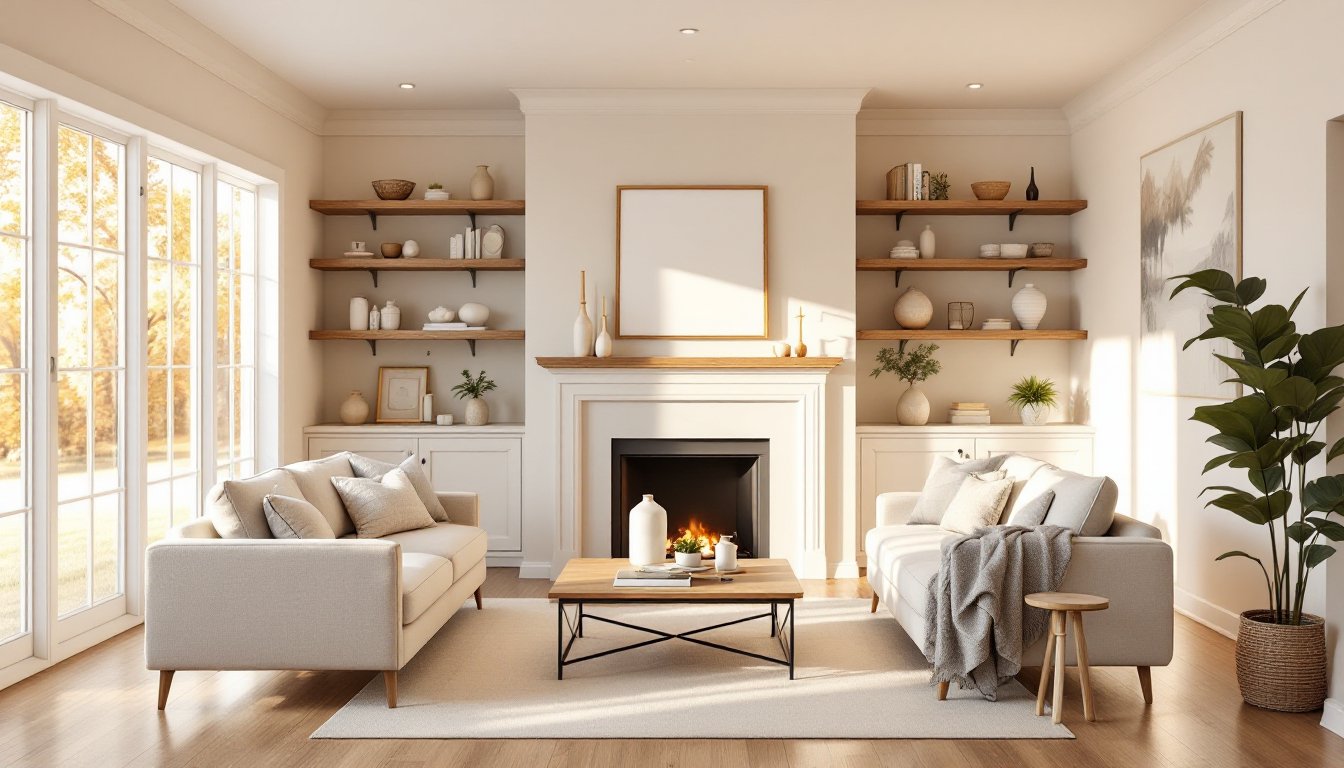
Warm whites are foundational in Joanna Gaines’ palette. Colors like Sherwin-Williams Alabaster (SW 7008) and Benjamin Moore Cloud White (OC-130) pull away from sterile, cold whites that can feel clinical. These warm whites carry subtle yellow or beige undertones, making them feel cozier while still maintaining that clean, fresh aesthetic. They’re especially effective in living rooms with traditional or farmhouse styling, where they complement wood trim, hardwood floors, and vintage furnishings.
Creams sit one step warmer than whites, offering slightly more personality without committing to a full color. Benjamin Moore Swiss Coffee (OC-45) and Sherwin-Williams Accessible Beige (SW 7036) are workhorse creams, they work in nearly any lighting condition and pair seamlessly with both cool and warm accent colors. Many DIYers gravitate toward cream for living rooms because it feels safer than white but warmer than beige. The practical advantage: cream hides minor wall imperfections better than stark white, reducing the need for perfect drywall finishing. That said, don’t skip primer on stained or previously painted surfaces: cream will ghost over water marks and yellowing without a good base coat.
Soft Greige and Taupe Shades
Greige, a blend of gray and beige, has become Joanna Gaines’ signature for living rooms seeking sophistication with softness. Sherwin-Williams Accessible Beige and Benjamin Moore Balboa Mist (OC-27) are popular greige options that ground a room while remaining neutral enough for flexible decorating. Greige works because it’s not purely cool or warm: it mirrors the nuance of linen and natural fabrics, making a space feel tactile even at a glance.
Taupe goes slightly deeper and grayer than greige, lending more formality to a living room. Sherwin-Williams Urbane Bronze (SW 7048) isn’t a true taupe, but it captures that sophisticated, grounded feeling Joanna often pursues. These deeper neutrals work beautifully in larger living rooms or spaces with substantial architectural details, moldings, fireplaces, built-ins, where they provide subtle contrast rather than disappearing into the background.
Before committing, remember that greige and taupe are lighting-dependent. North-facing living rooms may push slightly cooler with greige, while south-facing spaces can handle richer, grayer tones. Get samples, paint them on large boards, and move them around the room throughout the day.
Bold Color Choices for Statement Walls
While Joanna Gaines is known for neutrals, she occasionally deploys bolder colors, though strategically. A deep green or soft blue as an accent wall or on built-ins adds personality without overwhelming a living room. Colors like Sherwin-Williams Naval (SW 6244), a deep navy, or Benjamin Moore Palladian Blue (HC-144) work as statement choices because they complement skin tones in photographs and photographs well on social media, but more importantly, they anchor a room visually.
If attempting a bolder color, use it on a single wall, inside bookcases, or on a fireplace accent wall rather than all four sides. This approach reduces the risk of the room feeling cramped or gloomy. Pair bold colors with plenty of white or cream trim, and ensure adequate lighting, recessed lights, table lamps, or sconces prevent a dark color from reading as a cave.
A practical note: bold colors often require two coats of paint, and lighter colors underneath may shadow through, necessitating primer. Quality primers like Kilz 2 or Sherwin-Williams ProClassic tackle stains and provide better coverage than cheap primers. Don’t cheap out on the primer stage: it’s the difference between one extra coat and a manageable second coat of color.
How to Choose the Right Paint Color for Your Space
Start by assessing light. Where does the sun enter the living room? North-facing rooms stay cool and benefit from warm undertones. South and west-facing rooms get warmer light and can handle cooler or deeper neutrals. East-facing rooms get bright morning light, which can wash out some colors. Testing paint samples is non-negotiable, get several sample pints (usually around $5–8 each) and paint 2-foot by 3-foot swatches directly on walls. Leave them up for at least a week, viewing them at different times and in different lighting conditions.
Consider the room’s purpose and existing elements. If a living room doubles as a workspace, a softer neutral like cream keeps the space feeling calm. If it’s formal, greige or taupe add gravity. Look at furniture, rug colors, and artwork already in the room: paint should enhance, not compete. Joanna often chooses colors that harmonize with natural wood tones, stone fireplaces, or flooring, neutral enough not to clash, warm enough to feel intentional.
Test the paint on multiple walls if possible. A color on a north-facing wall will look different than the same color on a south-facing wall due to light quality. If that’s not feasible, paint large swatches in the areas with the most and least natural light. Finally, consider finish. Living rooms often work best in eggshell or satin finishes (not matte, which doesn’t wipe clean, and not glossy, which is too reflective). Sherwin-Williams ProClassic or Benjamin Moore Advance are premium options that level beautifully and resist scuffs from furniture movement.
Conclusion
Joanna Gaines’ living room paint palette succeeds because it prioritizes longevity and flexibility over fleeting trends. Whether choosing warm white, soft greige, or a strategic bold accent, the underlying principle remains: pick a color that complements the room’s light, respects its architecture, and creates a backdrop for the life happening in it. Sample generously, prep walls properly, and invest in quality primer and paint. A living room painted thoughtfully becomes a space people actually want to inhabit, not a showcase.