Table of Contents
ToggleSmall homes demand smarter layouts, and combining a kitchen and living room has become a practical necessity in modern residential design. Rather than fighting the constraint, savvy homeowners are turning open-concept kitchens and living spaces into functional, cohesive zones that feel larger than their square footage suggests. This approach works because it maximizes traffic flow, improves sightlines, and creates flexibility for how the space is used. The trick isn’t simply removing walls, it’s designing intentionally so the kitchen doesn’t feel like an afterthought, and the living area doesn’t get swallowed by cooking aromas and clutter. With the right layout strategies, materials, and furnishings, a combined kitchen-living room can feel spacious, organized, and genuinely livable.
Key Takeaways
- Open-concept kitchens and living rooms maximize visual space by eliminating walls, improving traffic flow, and extending sightlines throughout small homes.
- Define zones without physical barriers using flooring transitions, kitchen islands, subtle level shifts, or partial knee-walls that preserve light and sight lines while adding visual separation.
- Multifunctional furniture and right-scaled pieces—loveseat instead of sectional, round dining table instead of extension table—keep traffic paths clear and maintain the sense of openness in combined spaces.
- Unified color palettes with a neutral base and layered lighting (ambient, task, accent) amplify perceived space and create visual flow between the kitchen and living room.
- Vertical storage solutions—ceiling-reaching cabinets, wall-mounted shelves, toe-kick drawers, and tall open shelving—maximize capacity without consuming floor space in a combined kitchen-living room.
- Strategic pantry storage and a mix of closed and open cabinetry prevent kitchen clutter from bleeding into the living zone and keep the entire space functional and visually organized.
Why Open-Concept Layouts Work for Compact Homes
An open floor plan isn’t just trendy, it’s pragmatic for smaller footprints. When there’s no wall separating the kitchen from the living room, the entire area reads as one larger space visually. Light travels farther, sightlines extend, and a single window or light fixture serves double duty.
Practically speaking, open layouts eliminate wasted hallway space and allow one person to cook while supervising kids, chatting with guests, or watching TV. There’s no isolation or dead zones. You’re also not dealing with multiple doorways that eat up wall real estate or create awkward nooks.
That said, openness comes with trade-offs. Cooking smells drift into the living area, and kitchen noise (blender, dishwasher, exhaust fan) isn’t contained. Clutter in the kitchen is immediately visible from the couch. These aren’t dealbreakers, they’re just realities you need to plan around with ventilation, strategic storage, and design discipline.
Essential Layout Strategies to Maximize Your Space
A well-planned combined kitchen-living room layout hinges on clarity. The space needs to breathe, and each zone needs its own identity without walls or cheesy half-walls that clutter the sightline.
Defining Zones Without Physical Barriers
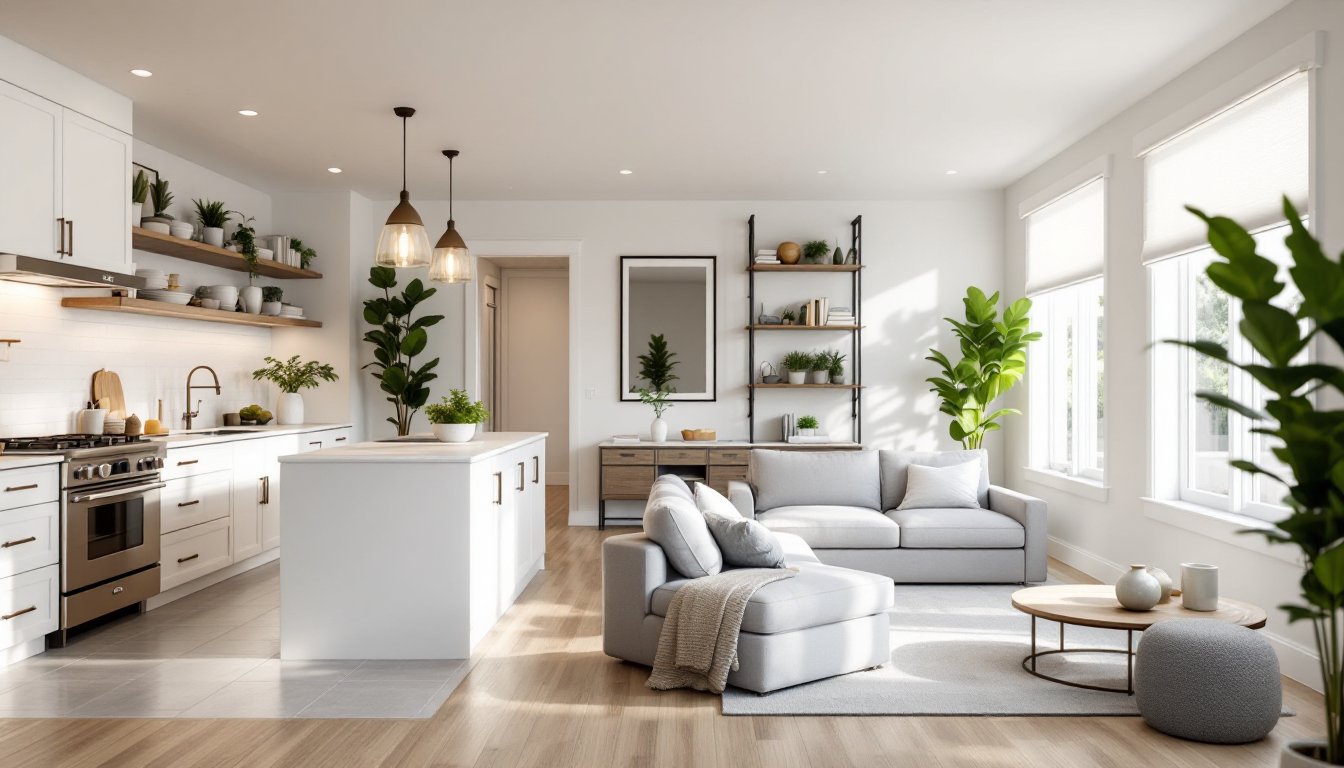
You can distinguish kitchen from living areas using flooring changes, a subtle level shift, or even a carefully placed kitchen island that acts as both workspace and visual boundary. A knee-wall (a partial-height partition about 36-42 inches tall) offers a softer divide than a full wall, it provides some visual separation and can hide lower kitchen clutter without blocking sightlines or light.
Another approach: use the kitchen’s cabinetry and appliances as the natural boundary. If your kitchen occupies one corner or end of the combined space, orient the stove, sink, and counters to face the living area rather than a wall. This creates an open kitchen bar or counter-height breakfast nook that invites interaction and feels less enclosed.
Flooring transitions are underrated. Switching from tile or sheet vinyl in the kitchen (easy to clean, durable under foot traffic) to laminate, vinyl plank, or low-pile carpet in the living area signals the shift without a wall. The material change is functional and visually distinct, one that codes immediately to most eyes.
Strategic Furniture Placement and Multifunctional Pieces
In a small combined space, furniture placement dictates how functional and comfortable the zone actually is. A sofa positioned to face the living area, not the kitchen, keeps the living room’s purpose clear. A console table or narrow bookshelf behind the sofa can serve as a subtle boundary while providing storage and display.
Multifunctional pieces are non-negotiable in tight quarters. A kitchen island with seating serves as dining, workspace, and a visual anchor. An ottoman with hidden storage doubles as a coffee table and stashes throw blankets. Open shelving in the kitchen can display dishes and cookbooks while adding visual interest instead of closing off the space with upper cabinets.
Size your furniture to the room, not to a magazine. A massive sectional or dining table will overwhelm a small combined space. Opt for scaled pieces, a loveseat instead of a full sectional, a 48-inch round or rectangular dining table instead of an oversized extension table. This keeps traffic paths clear and preserves the sense of openness.
Design Elements That Unify and Expand Your Space
Color, Lighting, and Visual Flow
Color cohesion is critical when the kitchen and living room share the same footprint. Drastically different color schemes, say, a dark gray kitchen and a beige living room, create visual discord and chop up the sense of space. Instead, use a unified palette with accent variations. A neutral base (light grays, warm whites, soft creams) in both zones creates flow, while accent colors (sage green, warm terracotta, soft blue) can differ slightly between zones without clashing.
Lighting design makes or breaks a combined space. Overhead ambient lighting alone creates shadows and feels flat. Layer your lighting: recessed ceiling fixtures for overall ambient light, pendant lights or track lighting above the kitchen island or counter, and table lamps or wall sconces in the living area for warmth and task light. This layering lets you dial up brightness for meal prep and lower it for relaxing without affecting the whole room.
Natural light amplifies the sense of spaciousness. If you have windows, resist the urge to block them with cabinets or tall furniture. Sheer curtains or roller shades preserve views and allow light to flood in. Mirrors opposite windows bounce light deeper into the space, a classic but effective trick.
Vertical emphasis can trick the eye into perceiving higher ceilings. Tall bookcases, floor-to-ceiling open shelving, or even a coat rack with vertical lines draws the eye upward. Avoid visual clutter at eye level: keep countertops and surfaces clear so sight lines stay clean and the room reads as larger.
Color psychology matters too. Light colors (whites, pale grays, soft neutrals) reflect light and feel airy. If you want personality, introduce it through accessories, throw pillows, artwork, plants, that you can swap out rather than permanent paint or cabinetry that locks you into a palette.
Storage Solutions for Combined Living Areas
A combined kitchen-living room lives or dies by storage. Without it, the space becomes a visual and functional disaster, kitchen clutter bleeds into the living zone, and nowhere exists to stash dining and entertaining essentials.
In the kitchen, resist the temptation to go all-open shelving to save money or space. Open shelves look great for three months, then gather dust and clutter. A mix of closed cabinetry (lower cabinets for pots, pans, appliances) and selective open shelving (for attractive plates, glassware, or cookbooks) balances aesthetics and function. If upper cabinets feel too closed-off, consider open shelves with a glass-front cabinet doors on a few units, you get the visual lightness of open design with protected storage.
Fully use vertical space: install shelving above the kitchen counter, use the wall behind a sink or stove for hanging pot racks or magnetic strips, and add cabinetry that reaches the ceiling if headroom allows. Toe-kick drawers (shallow pull-out storage at the base of cabinets) and pull-out pantry cabinets squeeze extra capacity into tight quarters.
In the living area, a console table with cubbies underneath, a storage bench, or a low bookcase on wheels (movable when you need floor space) solve the problem of stashing remotes, magazines, extra seating cushions, and entertaining supplies without consuming visual real estate. Wall-mounted shelves above a sofa or side table add storage without a footprint.
Don’t forget dead space: the area under stairs (if applicable), the gap beside a kitchen peninsula, or shallow wall niches carved from exterior walls all become prime real estate for cabinets, cubbies, or open shelves. Kitchen islands with lower shelves, drawers, and open racks multiply functionality.
Build in adequate pantry storage even if it’s a tall, narrow cabinet or a reach-in closet just off the kitchen. A cramped kitchen with no dry goods storage forces everything onto counters and into open view. A proper pantry, even a small one, keeps the kitchen visually clear and actually usable.