Table of Contents
ToggleAn ottoman is one of the smartest additions a homeowner can make to a living room. It works as a footrest, an extra seat, a coffee table alternative, or hidden storage, all in one piece of furniture. Whether someone is furnishing a small apartment or redesigning a sprawling family room, choosing the right ottoman can completely change how the space functions and feels. The key is matching the right style, size, and features to their specific needs and décor. This guide walks through essential ottoman ideas that help transform any living room into a more comfortable, organized, and stylish gathering space.
Key Takeaways
- Ottoman ideas for living rooms include choosing from modern, contemporary, classic, and traditional styles to match your existing décor and lifestyle needs.
- A storage ottoman with hinged lids or lift-tops provides hidden organization for throw blankets, games, and seasonal items while saving valuable floor space in smaller homes.
- Dual-purpose ottomans with removable tray tops transform instantly from footrest to coffee table, offering flexible functionality for guest seating and entertaining.
- Position your ottoman 12 to 18 inches from the sofa to create a cohesive seating zone while allowing comfortable leg extension without cramped spacing.
- Performance fabrics and microsuede are ideal for high-traffic households with pets or children, while genuine leather and textured fabrics like boucle offer durability and visual appeal with low maintenance requirements.
Choose the Right Ottoman Style for Your Space
The first step in selecting an ottoman is identifying which style aligns with the room’s existing décor and the homeowner’s lifestyle. Ottoman styles break down into a few core categories, each offering distinct visual appeal and functional benefits.
Modern and Contemporary Designs
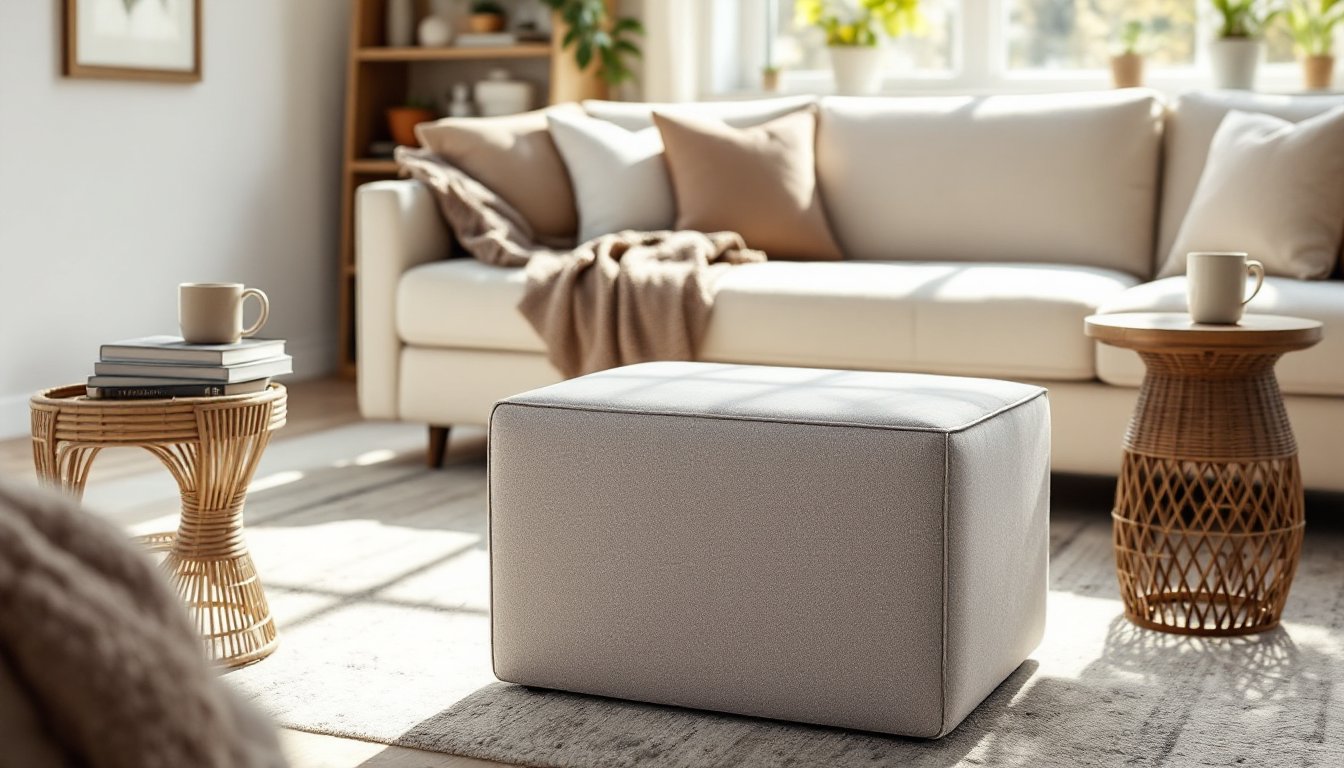
Modern ottomans emphasize clean lines, minimalist silhouettes, and neutral color palettes. These pieces typically feature low profiles, metal or wooden legs, and simple geometric shapes. A low-profile cube ottoman works well in modern living rooms because it doesn’t compete visually with other furniture and creates a streamlined look. Contemporary ottomans often come in materials like performance fabric, a durable, stain-resistant textile that handles everyday wear without looking fussy. They pair perfectly with sectionals and mid-century modern sofas. Modern ottomans typically measure 18 to 24 inches in height and come in square or rectangular configurations, making them easy to position in front of seating or at the foot of a bed.
Classic and Traditional Ottomans
Traditional ottomans embrace richer fabrics, ornamental details, and rounded or tufted designs. Tufted ottomans, those with button details pressed into the cushion surface, add texture and an inviting, lived-in quality. Classic styles work well with rolled-arm sofas, leather wingbacks, and traditional seating arrangements. These ottomans often feature wood frames (sometimes visible claw feet) and come upholstered in materials like velvet, linen, or wool blends. A traditional ottoman in a warm neutral like caramel or sage green creates a grounding focal point in eclectic or transitional rooms. The tufted or nailed-trim details also help hide wear better than smooth surfaces over time.
Maximize Functionality With Dual-Purpose Ottomans
Functionality matters in real living spaces where square footage is limited. A dual-purpose ottoman pulls more weight than a basic footrest, which makes it worth the investment. Leather ottomans with a removable tray top transform instantly into a coffee table, useful when the room needs flexible seating for guests. The tray secures to the ottoman and creates a flat surface perfect for drinks, remotes, or books: when it’s removed, the ottoman reverts to a footrest or extra seating.
Another smart option is an upholstered ottoman with a hinged lid, which opens to reveal internal storage. These work particularly well in apartments or open-concept living rooms where clutter control is critical. A 24-inch cube storage ottoman can hold throw blankets, board games, or seasonal décor, keeping the space organized without requiring additional shelving. Quality hinges matter here, look for ottomans with soft-close mechanisms that prevent lid slamming and extend the piece’s lifespan. Some homeowners pair multiple smaller ottomans instead of one large unit, which allows flexible arrangement for game nights or movie marathons. Two 18-inch square ottomans pushed together create a small seating area or footrest setup that’s easier to move when rearranging the room.
Storage Solutions That Save Space
Storage ottomans are game-changers for smaller living rooms or homes without dedicated closets. When selecting a storage ottoman, consider what items will actually be stored inside. Lightweight fabrics and knits are easier to launder if needed, while leather or performance fabrics resist staining from accidental spills. Internal dimensions matter, a 24-inch ottoman typically offers about 15 to 18 cubic feet of usable space, enough for six to eight throw pillows, a folded quilt, or a small collection of books.
The frame construction affects durability and weight capacity. Solid wood frames are more stable than particleboard, especially if the ottoman will bear regular weight. Homeowners should check the weight rating (typically listed as 200 to 400 pounds) to ensure the piece handles both storage load and sitting weight. A solid-wood ottoman with plywood support slats resists sagging better than models with webbing alone. Doors or access methods vary, some use lift-tops, while others feature hinged openings on the side. Side-opening designs work better in tight corners, while top-access ottomans integrate more naturally when positioned in front of a sofa. Avoid overpacking: a well-maintained storage ottoman lasts longer and looks better when not stuffed to capacity.
Styling Tips for Ottoman Placement and Pairing
Where an ottoman sits in the room dramatically affects how the space functions and looks. Directly in front of a sofa, an ottoman creates a cohesive seating zone and defines the conversation area. Place the ottoman 12 to 18 inches away from the sofa to allow comfortable leg extension without feeling cramped. In L-shaped sectional arrangements, a corner ottoman anchors the setup and provides an extra seat or surface for magazines and drinks.
Pairing ottomans with other furniture requires intentionality. A large statement ottoman works best when paired with a simpler sofa in neutral tones, let the ottoman carry visual interest. Conversely, if the sofa is patterned or upholstered in a bold color, choose a complementary solid ottoman that doesn’t compete. Size proportions matter, a 30-inch ottoman looks out of place next to a small apartment sofa, while a 18-inch cube might seem insubstantial in a large family room. Ottomans can also work in unexpected places: beside a reading chair, at the foot of a bed, or even in an entryway as a bench. Layering a throw blanket over the ottoman and adding a small side table nearby creates an inviting, magazine-worthy vignette without feeling overwrought.
Color and Fabric Choices That Complement Any Decor
Color and material selection sets the tone for the entire living room scheme. Neutral ottomans in white, gray, beige, or charcoal provide flexibility, they work with nearly any color scheme and allow other décor elements to shine. A neutral ottoman also hides dirt and wear patterns better than lighter shades in high-traffic homes.
Jewel-tone ottomans in emerald, sapphire, or deep plum add personality and anchor eclectic or transitional rooms. These work best as accent pieces rather than the primary seating option. Paired with white or light gray sofas, a jewel-tone ottoman becomes a subtle design statement.
Fabric choice depends on lifestyle and maintenance tolerance. Performance fabrics resist staining and work well for households with pets or young children. Genuine leather ages beautifully and requires minimal cleaning, though it costs more upfront. Linen and cotton blends offer breathability and a relaxed aesthetic but demand regular vacuuming and occasional professional cleaning. Microsuede provides softness and visual warmth while resisting spills better than true suede. Textured fabrics like boucle or chunky knit add tactile interest and hide dust more effectively than smooth surfaces. Avoid purely white or cream ottomans unless the household commits to regular professional cleaning, these choices show every footprint and dust particle.