Table of Contents
ToggleA gray couch serves as the perfect neutral anchor for any living room. It’s versatile, timeless, and doesn’t scream for attention, yet it can still be the hero of a thoughtfully designed space. The trick isn’t hiding the gray: it’s building a cohesive living room around it using color, texture, lighting, and intentional furniture placement. This guide walks through five design strategies that transform a gray couch from a safe default into a focal point that feels both modern and inviting. Whether someone owns a light ash gray sectional or a charcoal-toned sofa, these principles apply.
Key Takeaways
- Gray couches dominate modern interior design because they act as a neutral foundation that complements any color palette, hides wear effectively, and photographs well for design inspiration.
- Transform a gray couch living room by choosing either warm, grounded tones (creams, ochres, warm wood) or cool, contemporary accents (navy, sage green, cool metals) for a cohesive aesthetic.
- Layering is essential to avoid a flat, monotonous space—incorporate varied textures through area rugs, throw blankets, pillows in different fabrics, and natural materials like wood and plants.
- Strategic furniture placement and layout make the difference: float the couch in the room, add complementary seating pieces, and ensure the sofa faces an focal point rather than a blank wall.
- Warm white lighting (2700K) is crucial for making gray upholstery glow, while layered lighting from overhead fixtures, table lamps, and floor lamps creates depth and intentional design.
- Finish your gray couch space with purposeful accessories like statement art, a well-styled coffee table, quality window treatments, and greenery to signal thoughtful, modern design.
Why Gray Couches Dominate Modern Interior Design
Gray couches have become the default choice for a reason. Unlike bold jewel tones or stark white, gray is forgiving. It doesn’t fight with wall colors, rugs, or accent pieces. Designers and homeowners alike appreciate gray because it acts as a blank canvas, a neutral foundation that lets other elements shine while maintaining a cohesive, calm atmosphere.
Gray also photographs well, which matters for anyone scrolling through design inspiration online. But beyond aesthetics, gray upholstery hides wear better than light pastels and shows less dust and pet hair than dark fabrics. Practically speaking, it’s a fabric color that works for high-traffic families and minimalist households alike.
The psychology of gray matters too. It conveys sophistication and stability without the coldness of pure black or the blandness of beige. Modern design embraces this balance, creating spaces that feel refined but livable, contemporary but warm.
Color Palettes That Complement Gray Upholstery
The color story around a gray couch determines whether the room feels inviting or sterile. Two proven directions work best: warm, grounded tones or cool, contemporary accents.
Warm and Cozy Tones
Pairing gray with warm neutrals and earthy hues creates a living room that feels lived-in without sacrificing sophistication. Think warm whites, creams, soft taupes, and gentle ochres on the walls or in accent furniture. These colors echo natural materials, linen, wool, unfinished wood, and make the space feel grounded.
Warm wood tones amplify this effect. A honey-oak or walnut coffee table next to a gray sofa creates depth and warmth. Layer in burnt sienna throw pillows or a rust-colored area rug to introduce subtle warmth without clashing. Metallics like brass or copper picture frames and side tables add elegance without coldness.
This approach works especially well for gray couches in the lighter range (ash or fog gray). The warm accents lift the neutral without overwhelming it.
Cool and Contemporary Accents
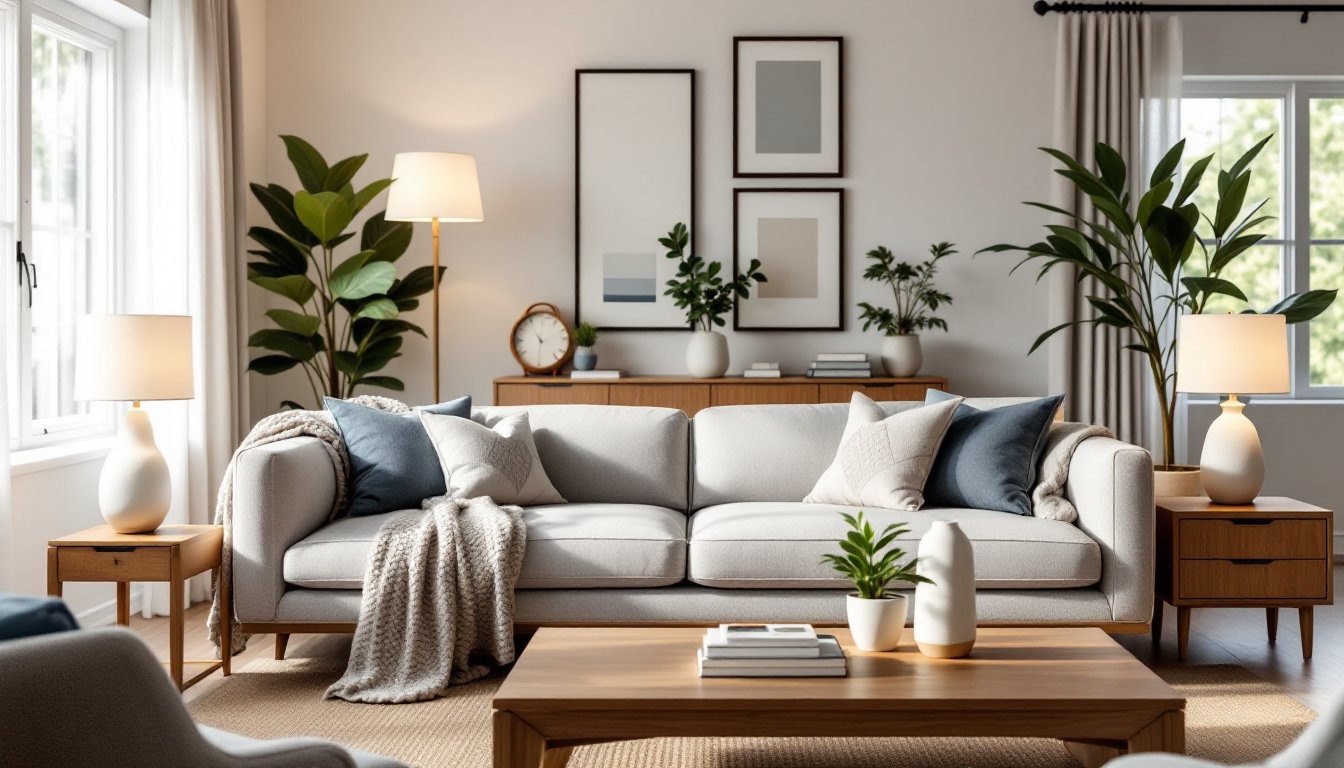
For a more modern edge, gray pairs beautifully with cool, contemporary colors. Navy blue, deep sage green, charcoal gray, or soft blue accents create visual interest while staying within a cohesive, sophisticated palette. A navy throw blanket draped over the arm of a light gray couch immediately signals intentional design.
Add pops of cooler tones through accent pillows, wall art, or a statement rug with gray and teal or gray and navy patterns. Sleek metals like polished chrome, stainless steel, or brushed nickel furniture complete the look. This palette appeals to those who want their living room to feel current and gallery-like, clean lines, minimal clutter, purposeful color choices.
Furniture and Layout Ideas for Gray Couches
The gray couch’s placement and its supporting cast of furniture determine how welcoming and functional the space feels. Avoid pushing the sofa flat against a wall like a tired apartment setup. Instead, float the couch in the room, positioning it to create conversation zones. Pair it with complementary seating, a set of accent chairs, a loveseat, or a bench, arranged to encourage face-to-face interaction.
A solid wood or upholstered ottoman serves double duty as a footrest and coffee table alternative, breaking up the visual monotony of a large gray piece. For layout, keep traffic pathways clear and ensure the sofa faces an entertainment console or window, not a blank wall. This makes the room feel intentional rather than accidental.
Consider the proportions of your supporting furniture. A gray sectional demands lighter, smaller accent pieces: a gray loveseat can anchor a room with bolder, larger pieces around it. Scale matters. A dainty side table next to a massive sectional looks timid: a substantial wooden console balances it.
Consider also whether the gray couch has clean-lined legs (modern) or a skirted base (transitional). Modern gray sofas pair better with minimalist tables and chairs, while transitional grays work with traditional wood pieces or upholstered furniture with nailhead trim.
Texture and Layering: Creating Depth Around Your Gray Sofa
A gray couch in a gray room with gray walls and gray furniture is visually flat. Depth comes from texture and layering, the interplay of different materials, patterns, and finishes. This is where most DIY living room projects fail: they underestimate the power of tactile variety.
Start with the rug. A natural fiber area rug (jute, sisal, or wool) under the sofa anchors the space and adds texture that reads warm and organic. Layer a pattern-rich throw blanket over the sofa arm, linen, chunky knit, or faux fur all work depending on the vibe. Throw pillows in varying fabrics (linen, velvet, cotton, and wool) and subtle patterns (geometric, abstract, or tonal stripes) prevent the gray from feeling one-note.
Add a textured wall hanging or gallery wall with frames in different finishes (wood, metal, glass). Incorporate natural elements: a wooden console, live plants in ceramic or concrete pots, or a reclaimed-wood shelf. These materials break the monotony of the gray upholstery while maintaining a cohesive, intentional look.
Layering also applies to soft furnishings. A chunky throw blanket, a woven poufs, and a sheepskin accent rug all coexist without clashing if they’re in complementary neutral tones. The key is variety without visual chaos, each element should have a reason for being there.
Lighting and Accessories That Enhance Gray Couch Spaces
Lighting can make or break a gray couch living room. Cool white LED bulbs can make gray look dingy: warm white (2700K color temperature) makes it glow. Install dimmable overhead lights paired with table lamps on flanking side tables for layered, flexible lighting. A floor lamp positioned behind the sofa creates ambient warmth and draws the eye upward, making the space feel taller and more intentional.
Accessories finish the story. A large statement art piece (abstract, botanical, or geometric) hung above the sofa adds personality without overwhelming the neutral foundation. Keep accessories purposeful: a leather-bound coffee table book, a sculptural vase, a carefully styled shelf with heirloom objects. Avoid cluttering the coffee table: a single decorative object and a practical item (like a candle) is often enough.
Window treatments matter too. Lightweight linen curtains in warm white or soft taupe soften the look, while heavier velvet drapes in navy or charcoal add drama. The right drapes frame the room and prevent it from feeling incomplete.
Final touches: a throw blanket in a contrasting texture, a pair of matching side tables in natural wood or metal, and greenery (real or high-quality faux plants) tied the room together. These aren’t afterthoughts: they’re the finishing details that signal a space was thoughtfully designed.
Bringing It All Together
A gray couch is a foundation, not a limitation. By thoughtfully layering color, texture, lighting, and carefully selected furniture, anyone can transform a neutral gray sofa into the anchor of a warm, inviting, and modern living room. The strategy is consistency: choose a color direction (warm or cool), stick with it, layer in texture and materials, and let quality lighting elevate the whole space. Start with one element, perhaps a new rug or throw pillows, and build from there. The result is a room that feels intentional, inviting, and unmistakably designed.