Table of Contents
ToggleAn open concept kitchen and living room has become the go-to layout for modern homes, and for good reason. Tearing down that wall between the kitchen and living room (when structurally possible) creates a bright, flexible space where families can cook, gather, and relax without feeling isolated. But pulling this off requires more than just swinging a sledgehammer. Homeowners need to think through traffic flow, sightlines, kitchen ventilation, and how to make two distinctly different functional areas feel like one cohesive room. This guide covers what an open concept layout really means, why it works, what design choices make it shine, and how to dodge the pitfalls most people hit.
Key Takeaways
- An open concept kitchen and living room removes physical barriers to create one unified, bright space that increases natural light, improves family interaction, and makes homes feel larger and more modern.
- Cohesive design across color palettes, flooring, and furniture arrangement is essential to make an open concept layout feel intentional and connected rather than disjointed.
- A properly vented range hood (300–600 CFM vented outside) is non-negotiable for managing cooking odors and smoke in open concept spaces.
- Load-bearing wall removal requires a structural engineer assessment, building permits, and professional installation—cutting corners leads to code violations and resale problems.
- Abundant closed storage, cabinets, and a butler’s pantry help manage the visibility of clutter and mess in an always-on-display kitchen.
- Open concept kitchens require intentional planning around traffic flow, sightlines, kitchen ventilation, and acoustic considerations to avoid common pitfalls like noise and inefficient temperature control.
What Is an Open Concept Kitchen and Living Room?
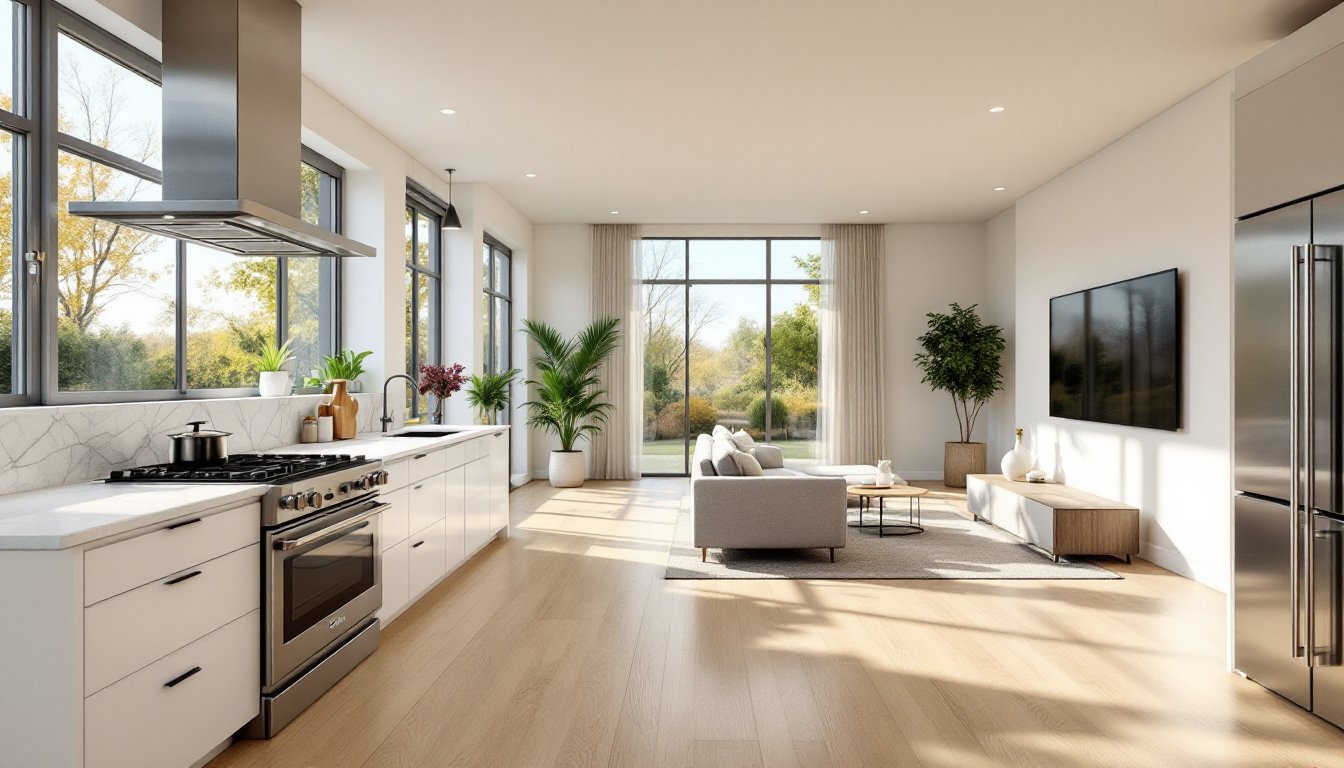
An open concept kitchen and living room removes or drastically minimizes physical barriers between the two spaces, creating one large, unified area. In most cases, this means eliminating a load-bearing or non-load-bearing wall, or simply opening up an existing layout by removing cabinetry and doorways that divide the spaces.
If the wall is load-bearing, and you’ll need a structural engineer to confirm, you’ll need to install a beam (steel, engineered wood, or laminated veneer lumber) to carry the weight of the floor or roof above. Non-load-bearing walls come down much easier, but either way, you’re looking at permits, inspections, and usually professional framing work.
The goal is to create visual and physical continuity. From the kitchen, you should see into the living room without obstruction. People sitting on the sofa can watch dinner being prepared. The cook doesn’t feel cut off from family activities. This requires intentional layout design, your kitchen island placement, counter heights, flooring transitions, and color choices all affect how the space reads as one cohesive zone rather than two disconnected rooms crammed together.
Key Benefits of Open Concept Design
Open concept kitchens and living rooms solve real problems that closed-off layouts create. Beyond the Instagram appeal, homeowners find practical advantages that affect daily life and home resale value.
Increased Natural Light and Spaciousness
With fewer walls, windows can illuminate a larger floor area. A west-facing window in what used to be a separate living room now floods the kitchen counter with afternoon light. This reduces your reliance on artificial lighting during the day, a small win for your electric bill and your mood.
The space also feels bigger. Without walls to chop up the square footage visually, a 400-square-foot combined area reads as open and airy rather than cramped. Ceilings look higher, and sightlines extend across the whole footprint. This matters especially in smaller homes or those with lower-than-standard ceilings. The psychological impact of openness shouldn’t be underestimated: it changes how people experience the home.
Better Family Interaction and Entertaining
A parent prepping dinner can supervise kids doing assignments at the island counter. Someone on the sofa stays connected to conversations happening at the stove. Hosting friends for a casual gathering becomes natural, guests flow between the kitchen (where snacks and drinks are) and the living room (where they relax) without feeling like they’re entering separate rooms.
This layout also modernizes how people use their homes. Families now want multifunctional spaces where cooking, working, and socializing overlap. The closed-off kitchen of the 1980s isolation is gone. Open concept enables this lifestyle shift and makes the home more appealing to buyers who expect it.
Essential Design Elements for a Cohesive Space
Creating one unified space from what were two separate rooms demands attention to visual and functional continuity. Design mismatches make the space feel disjointed and smaller, not larger.
Color, Flooring, and Visual Flow
Your kitchen and living room should share a cohesive color palette. This doesn’t mean everything is the same color, it means the tones play well together. If your kitchen has warm white cabinetry and stainless appliances, the living room walls shouldn’t clash with cool blue accents. Plan your wall colors, cabinet finishes, and accent pieces as one conversation, not two separate decisions made years apart.
Flooring is critical. Running the same material, or closely matched materials, across both zones creates visual continuity. Tile, luxury vinyl planks (LVP), or hardwood that flows from kitchen to living room erases the boundary. If you’re using different materials (tile in the kitchen for durability and moisture resistance, hardwood in the living room for warmth), use a transition strip or threshold of complementary material to bridge them. Abrupt transitions make the space feel choppy.
Arrangement and sightlines matter too. Position your sofa and TV so the furniture doesn’t create a wall that visually divides the space. An island counter that doubles as a boundary between zones can work well, it defines the kitchen while staying permeable. Avoid cluttered kitchen counters that feel messy when viewed from the living room seating: open concept means your kitchen is permanently on display.
Addressing Common Open Concept Challenges
Open concept isn’t perfect for every family or home. Being realistic about the downsides helps you decide if it’s right for you, or how to mitigate problems.
Cooking odors and smoke travel directly into your living room and bedrooms upstairs. You’ll need a range hood with sufficient CFM (cubic feet per minute) rating, typically 300–600 CFM depending on your cooktop size, vented to the outside, not recirculated. Recirculating hoods don’t remove odors: they just filter and blow air back into the kitchen. This is non-negotiable in open layouts. Ductless hoods are better than nothing, but a properly vented hood is essential.
Noise and kitchen clatter carry into the living room during cooking and dishwashing. Hard flooring amplifies this further. If this is a dealbreaker for your household, consider acoustic treatments, area rugs in the living room, softer flooring in the kitchen, or a sound-dampening mat under appliances. You can’t eliminate it entirely, but you can reduce it.
Lack of separation means dishes, clutter, and prep mess are visible from the seating area. Homeowners with small kids or busy schedules often regret this. Build in plenty of closed storage, cabinets, a pantry, or a butler’s pantry between the kitchen and living room, so you can hide the chaos. Don’t design an open kitchen with minimal cabinetry: it looks great for a magazine photoshoot but not for real life.
Heating and cooling can be less efficient in one large space. Temperature gradients form more easily. Use ceiling fans and proper zoning in your HVAC system to manage this. It’s usually not a dealbreaker, but it’s worth considering if you’re in an extreme climate.
Structural and code considerations: If you’re removing a wall, hire a structural engineer to verify whether it’s load-bearing and what beam size you need. You’ll need a building permit in virtually all jurisdictions, and an inspector will verify the beam installation, electrical rerouting, and HVAC ducting. Skipping this to save money is a recipe for code violations, failed inspections, and problems when you sell. Do it by the book.