Table of Contents
ToggleA large modern living room can feel cold and impersonal if approached without intention. The temptation is to underestimate the square footage and end up with sparse, scattered furniture that only emphasizes emptiness. The key to designing a large modern living room lies in treating scale and proportion seriously, breaking the space into functional zones, and layering materials and light strategically. This guide walks through practical strategies, from furniture placement to lighting choices, that transform an oversized room into a genuinely comfortable gathering space.
Key Takeaways
- Choose furniture scaled appropriately for a large modern living room—a sofa between 72-96 inches wide with oversized ottomans and substantial seating prevents the space from feeling sparse and empty.
- Break your large modern living room into 2-3 functional zones using furniture arrangement, area rugs (8×10 or 9×12 feet), and layered lighting rather than pushing all pieces to the perimeter.
- Anchor walls with substantial pieces like 60-72 inch media consoles and proportional shelving to ground the space and prevent visual drift.
- Use a neutral color base with carefully chosen accents, mixing warm wood, cool metals, and soft textures to create visual interest without overwhelming the space.
- Layer lighting strategically with recessed overhead fixtures, wall sconces, task lighting, and dimmers to define zones and prevent the room from feeling flat or showroom-like.
- Maximize natural light through large windows with motorized shades and lightweight curtains, then complement with warm-white LED bulbs (2700K) positioned throughout the room for depth and coziness.
Understanding Scale and Proportion in Large Living Spaces
The biggest mistake in large living rooms is choosing furniture that’s too small. A standard loveseat or single armchair looks lost in a 20-by-25-foot room, no matter how well-designed. Think in terms of human scale and distance: if viewers sit on one end of the room, they need to feel engaged with the furniture arrangement, not surveying it from across a canyon.
Start by anchoring the room with a large sofa, typically 72 to 96 inches wide for a spacious layout. Pair it with equally substantial seating: a pair of 32-inch-wide club chairs or a sectional that fills the space without overwhelming it. Oversized ottomans (think 36 by 48 inches) serve as flexible lounging and visual mass. Coffee tables should be scaled up too: a 48-by-28-inch table is reasonable for a large room, whereas a dinky 30-inch model will look like a side table.
Proportional wall-mounted shelving or a substantial media console also helps ground the space. A console that spans 60 to 72 inches anchors the wall and prevents visual drift. The goal is to create pockets of function and beauty at human scale, even if the overall room is enormous.
Creating Functional Zones Without Walls
Furniture Arrangement Strategies
Divide the large living room into two or three functional zones: a main seating area for viewing and conversation, a secondary reading nook, or a workspace. Avoid pushing all furniture to the perimeter, this makes the room feel hollow and discourages use of the floor space.
Arrange the primary seating in a classic L-shape or floating cluster, positioning pieces to face each other across the coffee table. Leave at least 18 to 24 inches between the sofa edge and the coffee table for comfortable leg room. If the room is deep, place a secondary seating area, a pair of accent chairs with a small side table, at the opposite end to create visual interest and balance.
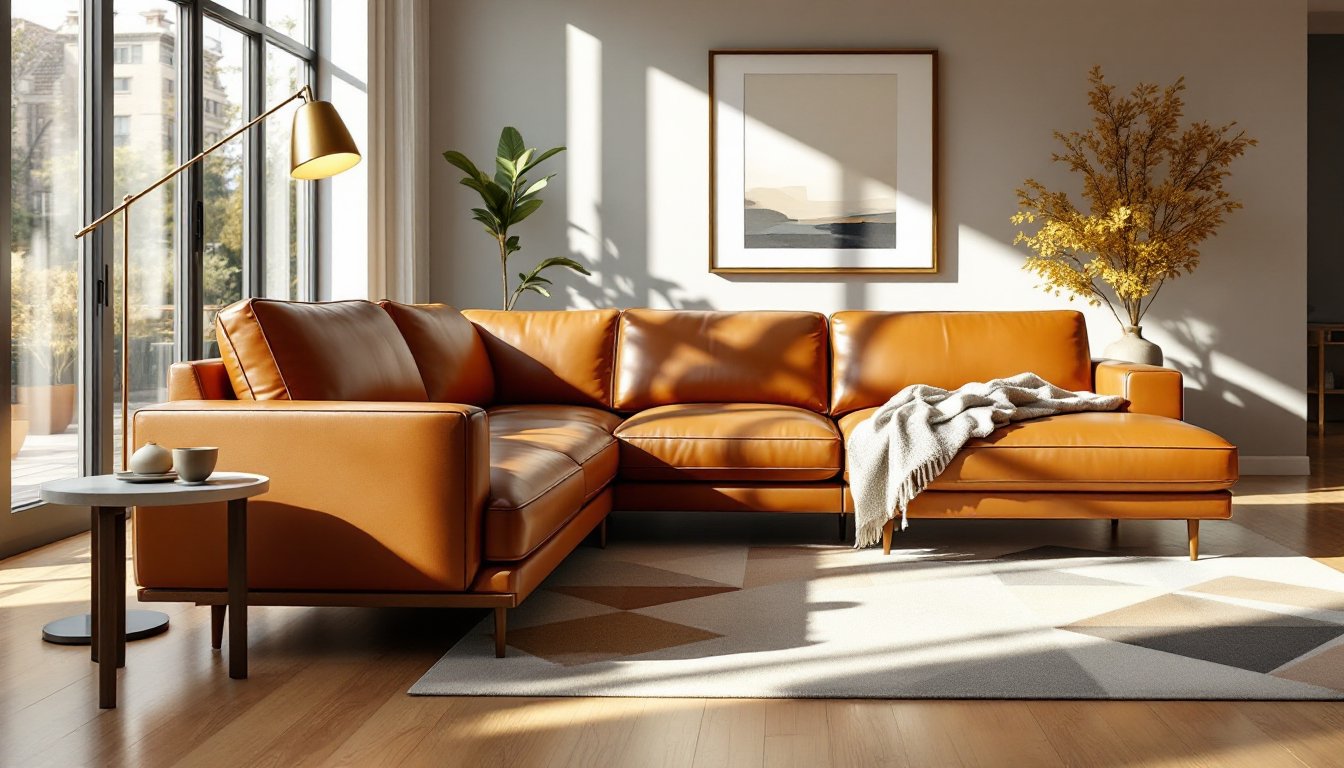
For a modular approach, consider a sectional sofa that can anchor one corner while defining the main zone, then add a separate console table behind it to create a subtle boundary without blocking sightlines.
Defining Areas With Rugs and Lighting
Area rugs are the unsung heroes of zone-making. A large modern living room benefits from a rug that measures 8 by 10 feet or 9 by 12 feet, positioned under the primary seating cluster so all furniture legs sit on it. This visually unifies the arrangement and prevents the seating from feeling adrift. In a large room, skimping on rug size is obvious, aim for the rug to extend at least 18 inches in front of the sofa.
Layered lighting reinforces zones. Use overhead recessed lighting or a modern pendant fixture at the center of the room, wall sconces flanking the sofa for ambient evening light, and task lighting, a floor lamp beside the reading chair or accent spotlights on shelving, to draw the eye to specific areas. Dimmer switches on overhead lights prevent the space from feeling like a showroom. Avoid relying solely on one ceiling fixture: it flattens the room and makes it harder to define zones.
Modern Color Palettes and Material Choices
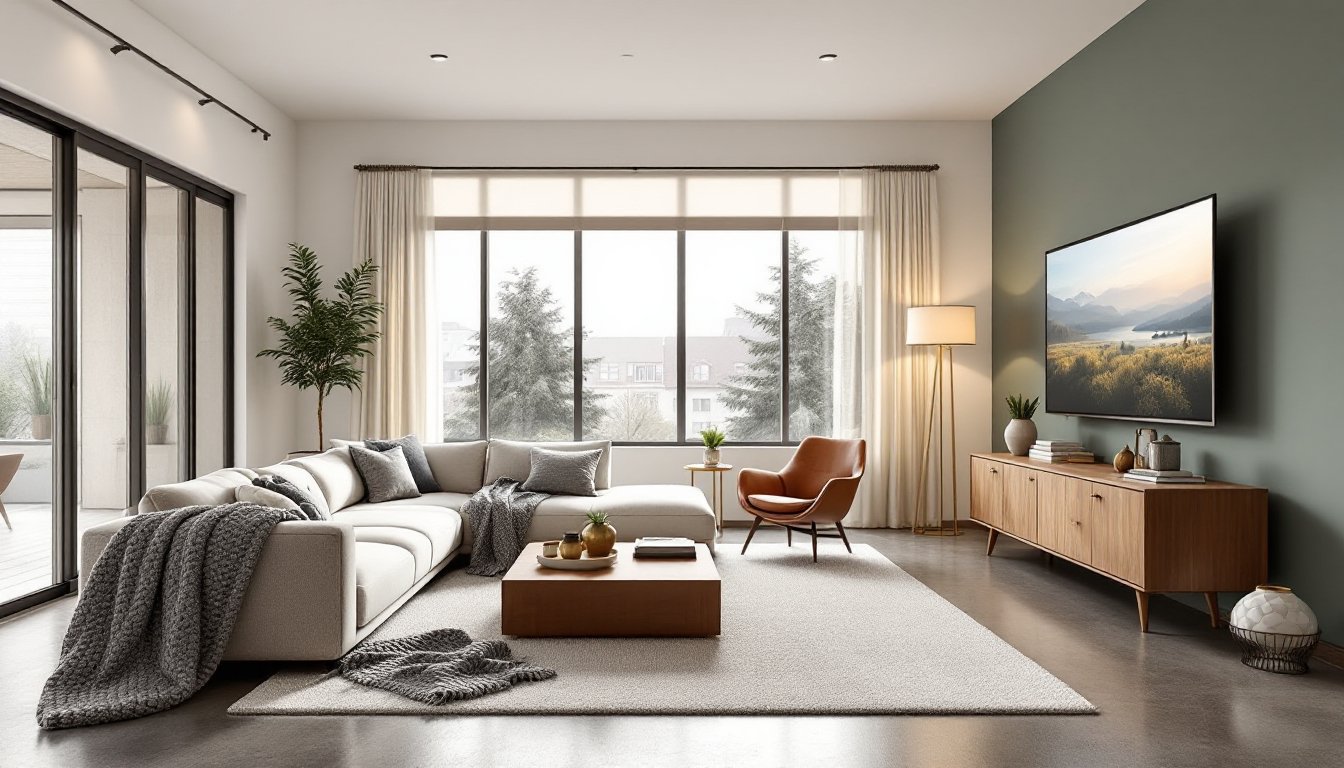
Modern design in a large room thrives on restraint. A neutral base, warm whites, soft grays, or warm beige, prevents visual chaos and makes the space feel cohesive. Introduce color through accent walls (one feature wall in a muted sage, charcoal, or navy reads contemporary without screaming), textiles, or art rather than painting the entire room in bold color.
Material variety adds warmth without cluttering. Combine natural wood shelving or a walnut media console with metal accents (brass, matte black, or brushed steel frames), concrete or polished concrete flooring, and linen or performance fabric on seating. The mix of warm wood, cool metal, and neutral textiles creates visual interest while staying modern and grounded.
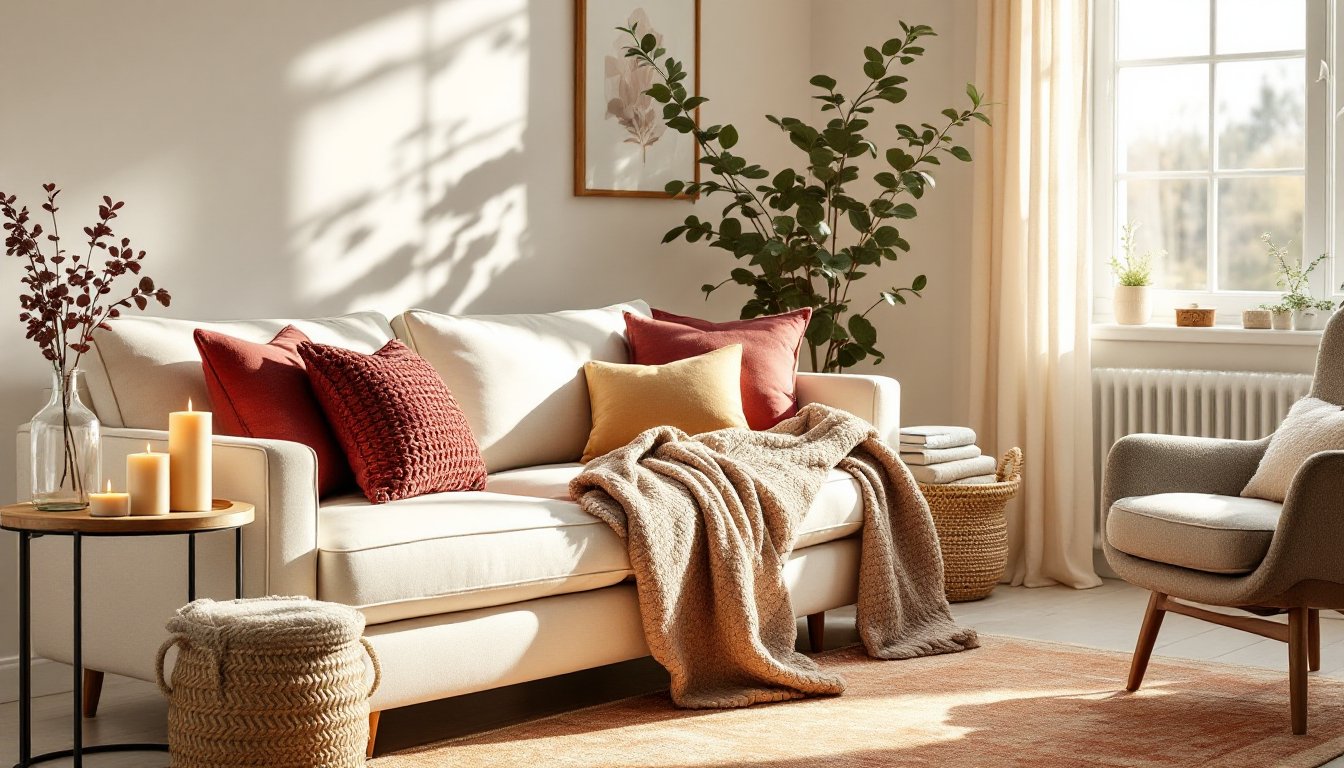
Incorporate soft textures intentionally: throw blankets in chunky knit or linen, a shag or low-pile area rug, and layered pillows in coordinating tones prevent the room from feeling sterile. Keep the color palette to three to four primary colors plus neutrals to maintain focus and warmth. For example, soft gray sofa, warm white walls, natural wood console, muted blue accent chairs, and brass lighting fixtures create a balanced, inviting modern room.
Maximizing Natural Light and Adding Layered Lighting
Large windows are a gift in a modern living room, don’t cover them with heavy drapes. Install motorized roller shades in neutral linen or privacy-grade fabric to filter light while maintaining a clean, contemporary look. Sheer white or cream curtains soften hard lines and let light diffuse naturally. If privacy is a concern, opt for motorized roller shades paired with lightweight linen panels in the same neutral tone.
For large windows (48 inches or wider), consider mounting curtain rods 12 to 18 inches above the window frame and extending them 8 to 12 inches beyond each side to make windows feel larger and let more light in when the curtains are open.
Artificial lighting should reinforce, not replace, natural light. Combine warm-white LED bulbs (2700K color temperature) with layered fixtures: recessed lights in the ceiling, modern track lighting for artwork or wall details, table lamps on side tables, and standing floor lamps for reading zones. Use dimmers on all layers to adjust mood and functionality throughout the day. Avoid cool-white or harsh lighting, which makes a modern space feel cold and uninviting. Strategic accent lighting, spotlights on a feature wall or shelving, warm uplighting from floor corners, adds depth and prevents flat, lifeless lighting.
Conclusion
Designing a large modern living room is about respecting the scale and filling it with intentionality, not just more furniture. Anchor the space with appropriately sized pieces, create functional zones using rugs and lighting, and layer materials and colors to build warmth. The result is a room that feels both spacious and intimate, modern in aesthetic, but genuinely livable for everyone who enters it.