Table of Contents
ToggleWall lighting transforms a living room from functional to inviting. Modern living room wall lights do far more than fill dark corners, they define mood, layer illumination, and anchor design intent. Unlike overhead fixtures, wall-mounted options direct light where it’s needed, reduce glare, and work with existing ceiling infrastructure. Whether homeowners are refreshing a dated space or building from scratch, the right wall lights balance aesthetic appeal with practical task lighting. This guide walks through selecting, positioning, and installing modern wall lights that genuinely improve how a room functions and feels.
Key Takeaways
- Modern living room wall lights enhance mood, reduce glare, and provide flexible task lighting without relying solely on overhead fixtures.
- Optimal mounting height is 60–66 inches from the floor to fixture center; symmetrical placement on either side of focal points creates visual calm.
- LED wall lights consume 75% less energy than incandescent bulbs and last 25,000+ hours, saving $50–$100 per fixture over five years.
- Aim for 100–150 lumens per fixture for ambient living room lighting and 300+ lumens for reading nooks to ensure proper brightness.
- Layered lighting combining wall sconces with dimmable ceiling fixtures, task lights, and accent lights creates depth and allows rooms to shift from functional to relaxing.
- Smart home-enabled wall sconces let homeowners adjust color temperature from warm 2700K for evenings to cooler tones via smartphone or voice control.
Understanding Modern Wall Light Styles and Design Trends
Modern wall lighting runs the spectrum from minimalist metal cylinders to sculptural brass fixtures that double as art. Today’s designers favor clean lines, mixed materials, and fixtures that add visual interest without overwhelming a room.
Contemporary Design Elements and Materials
Contemporary wall lights emphasize materiality, think brushed brass, matte black, warm bronze, and even reclaimed wood pairings. Integrated LED fixtures have shifted design possibilities: older wall sconces required visible bulbs and sockets, but modern seamless designs hide electronics entirely, creating sleek silhouettes.
Mid-century and industrial aesthetics remain popular. Homeowners gravitate toward fixtures with exposed Edison-style bulbs paired with metal frames, or clean geometric shades that diffuse light evenly. Glass and frosted acrylic diffusers reduce harsh spotting and glare.
Material quality matters. A fixture using die-cast aluminum or steel will outlast thin stamped metal. Check weight and build, heavier fixtures typically indicate better construction. Finish durability also counts: look for powder-coated finishes that resist fingerprints and tarnishing better than simple paint.
Color temperature trends lean warm. 2700K–3000K (soft white) is now standard for living areas because it feels residential and comfortable. Cooler 4000K+ tones suit kitchens and task areas but feel institutional in a living room.
Choosing the Right Wall Lights for Your Living Room Layout
Placement strategy determines whether wall lights enhance or underwhelm. A fixture mounted too high casts shadows: too low, it becomes a bump hazard and shadows pooling underneath. Living room layouts demand flexibility.
Placement Strategies and Room Configuration
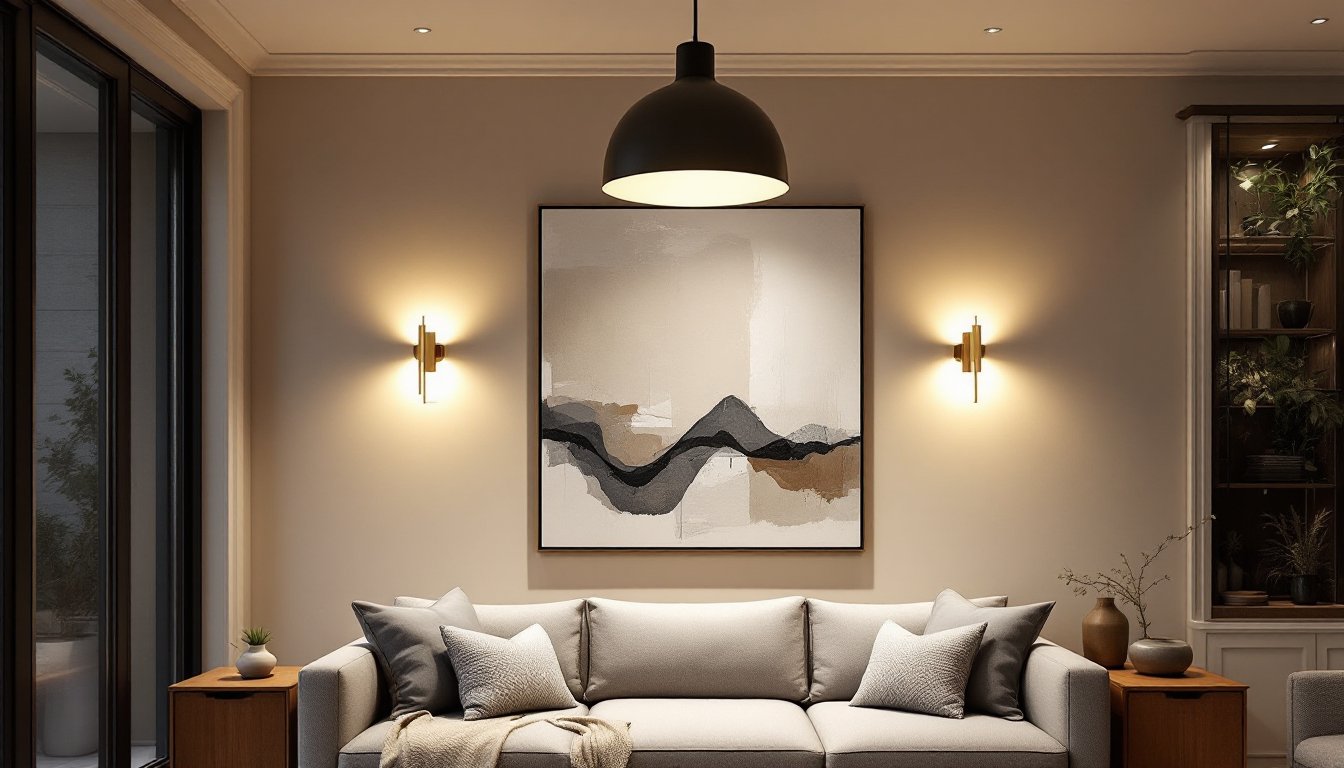
Mount wall lights 60–66 inches from the floor to the center of the fixture. This height works for most seating and standing activities. For flanking a sofa, place fixtures 18 inches above the back height: for bedside-style reading, position them 24–30 inches above nightstands.
In living rooms with seating arrangements, symmetry creates visual calm. Pair fixtures on either side of a fireplace, mirror, or artwork. Asymmetrical arrangements work in open-plan spaces where one wall anchors seating and the other features media or storage.
Consider switch placement before mounting. Homeowners appreciate three-way switches or smart controls so lights can be dimmed independently from overhead fixtures. Running wire during new construction or renovation is simpler: retrofitting requires fishing wire through walls (doable but fussy).
Room size affects quantity. Small living rooms (under 200 sq ft) work well with two flanking fixtures. Larger spaces benefit from three or four strategically placed units. Aim for even light distribution without overlapping pools.
Smart Lighting Features and Energy Efficiency
Modern wall lights increasingly feature integrated LED arrays or LED-compatible sockets. LEDs consume 75% less energy than incandescent bulbs and last 25,000+ hours, essentially the fixture’s lifetime in most homes.
When shopping, check lumens, not watts. A 12W LED might produce 1,100 lumens, equivalent to a 75W incandescent. For living room ambient lighting, aim for 100–150 lumens per fixture: for reading nooks, 300+ lumens. Dimmable LEDs require compatible dimmer switches, standard dimmers may flicker with cheap LED fixtures.
Smart home integration is increasingly standard. WiFi-enabled wall sconces let homeowners adjust brightness or color temperature via smartphone or voice assistant. This flexibility lets a room shift from morning reading light (bright, 4000K) to evening relaxation (warm, dimmed 2700K) without rewiring.
Energy Star certified fixtures and LED bulbs reduce utility bills measurably. Over five years, a switch from incandescent to LED wall lighting typically saves $50–$100 per fixture in electricity alone. For renters or those hesitant about hard wiring, plug-in wall sconces with USB charging ports offer flexibility and portability while reducing clutter from separate charging cables.
Creating Ambiance With Layered Lighting Solutions
Wall lights thrive as part of a layered approach. Relying solely on overhead ceiling lights flattens a room: layered lighting, ambient (overhead), task (reading, accents), and accent (highlighting artwork), creates depth and mood.
Wall sconces function as ambient light in early evening, filling the space softly without overhead harshness. Pair them with a dimmable ceiling fixture to adjust overall brightness. Task wall lights (brighter, 300+ lumens, positioned beside seating) support reading without straining eyes. Accent lights, often narrower or directional, highlight artwork, shelving, or architectural details.
Material and diffuser choice affect ambiance. Opaque or fabric shades create softer, more diffused light suitable for relaxation. Clear glass or no shade produces sharper, more defined light, better for reading. Warm brass or copper fixtures inherently feel cozier than chrome or stainless steel.
Layering also means mixing fixture types. Track lighting handles accent duties: traditional sconces provide ambient fill: and adjustable swing-arm fixtures near seating handle task work. This flexibility is why modern living rooms often feature three to five different light sources working in concert.
Consider motion sensors or occupancy switches for entryways adjacent to living rooms. They don’t suit primary living spaces, but they keep hallways and transitions lit without manual switching, creating seamless flow between zones.
Conclusion
Modern living room wall lights solve both practical and aesthetic challenges. They layer illumination, define style, and respond to how people actually use their spaces. Choosing fixtures with durable materials, appropriate brightness (measured in lumens), and smart dimming capabilities ensures years of comfort and flexibility. Whether installed symmetrically flanking seating or asymmetrically across an open plan, wall sconces anchor modern interiors and make rooms feel intentional and inviting.