Table of Contents
ToggleCreating a farmhouse living room doesn’t require a sprawling acreage or a design degree. Whether someone is drawn to the warmth of reclaimed wood, the simplicity of vintage textiles, or the timeless appeal of rural aesthetics, farmhouse decor delivers comfort without pretension. The beauty of this style lies in its flexibility, it works equally well in a suburban home, urban loft, or countryside cottage. This guide walks through practical farmhouse living room decor ideas that balance authentic charm with livable, functional spaces. By focusing on foundational style choices, color schemes, materials, and thoughtfully selected accessories, anyone can transform their living room into a cozy retreat that feels both inviting and enduring.
Key Takeaways
- Farmhouse decor ideas for your living room thrive when you choose between classic and modern styles early to maintain consistency and avoid clashing design elements.
- A neutral color palette of creams, soft whites, warm taupes, and pale grays creates a serene backdrop that lets natural textures and reclaimed wood become the visual focus.
- Layering natural materials like reclaimed wood, wrought iron, linen, and woven jute adds depth and sensory richness without relying on bold colors or patterns.
- Select furniture with vintage finishes and distressed details that appear collected over time rather than purchased as a matched set, prioritizing comfort and livability.
- Accessorize with functional pieces like wooden ladders, galvanized carts, Edison-bulb lighting, and natural fiber rugs to complete your farmhouse living room design authentically.
Define Your Farmhouse Style Foundation
Understanding Modern Versus Classic Farmhouse
Before diving into decor purchases, it’s worth clarifying which farmhouse direction resonates. Classic farmhouse draws heavily from 19th-century rural homes, think weathered finishes, worn patina, and an almost museum-like attention to historical authenticity. Pieces feel salvaged and imperfect by design. Modern farmhouse, by contrast, strips the style down to its essentials: clean lines, functionality, and a lighter color story that leans more contemporary. Both approaches share a love of natural materials and understated elegance, but classic farmhouse embraces distressing and dark tones, while modern farmhouse stays brighter and more minimalist.
The choice matters because it guides every purchase and placement decision moving forward. Someone choosing classic farmhouse will seek out deeply weathered barn wood and heavy, ornate frames, while modern farmhouse fans might opt for light pine, sleek metal fixtures, and streamlined upholstery. Neither approach is “more farmhouse” than the other, they’re simply different expressions of the same core values: authenticity, craftsmanship, and comfort. Deciding early prevents a disjointed look where classic and modern elements clash rather than complement. A room works best when its foundational style is clear and consistent throughout.
Choose A Neutral Color Palette
Farmhouse living rooms thrive on a restrained color foundation. The classic palette runs to creams, soft whites, warm taupes, pale grays, and muted earth tones, beige, tan, and soft sage. These neutrals calm the eye and let textures, wood grain, and layered materials become the visual interest instead of bold color blocking.
Warm whites (not stark, bright white) pair beautifully with honey-toned or gray-washed wood. Soft taupes ground the space and add subtle warmth. Pale grays work especially well for modern farmhouse, bridging the gap between traditional and contemporary sensibilities. The key is choosing one or two anchor neutrals, say, warm white walls and taupe upholstery, then layering in accents. Deep charcoal, soft black, or muted rust can punctuate without overwhelming. Avoid yellowed creams unless genuinely aiming for a heavily aged look: they can read as dated or dingy.
Color restraint isn’t boring: it’s strategic. It creates a serene backdrop that lets farmhouse’s real stars, reclaimed wood beams, linen textures, vintage finds, shine. Rooms with too many competing colors lose the cohesive, restful quality farmhouse is known for.
Incorporate Natural Materials and Textures
Wood, Metal, and Woven Elements
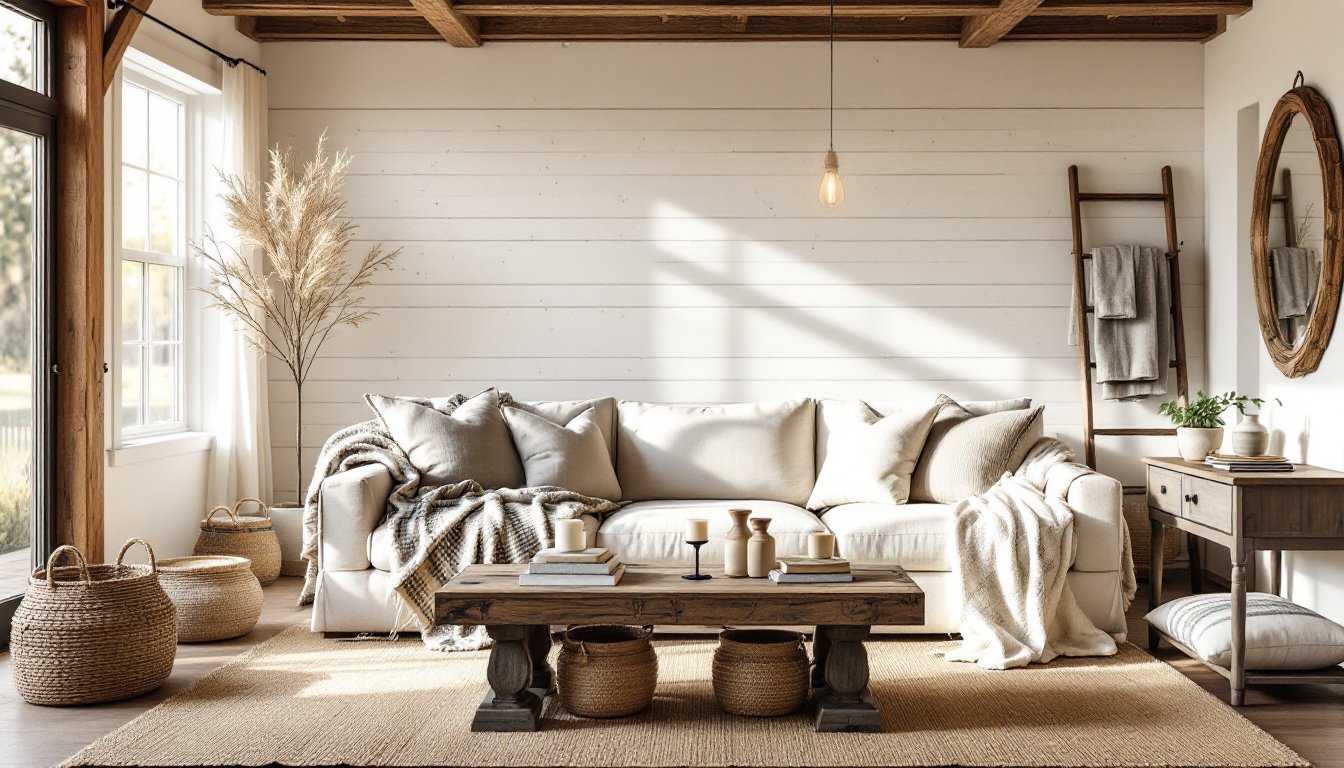
Texture is farmhouse’s secret weapon. Unlike styles that rely on color or pattern, farmhouse draws depth from how surfaces feel and catch light. Wood is the obvious anchor, exposed ceiling joists or a feature wall of shiplap in whitewashed, raw, or dark stain reads instantly farmhouse. Reclaimed barn wood carries authentic weathering that new distressed wood mimics but rarely duplicates, though reclaimed lumber costs more and requires careful inspection for nails and structural integrity.
Metal accents, iron hardware, galvanized buckets, wrought-iron candle holders, echo a farm’s utilitarian past. These pieces ground the space in practicality. A simple iron bracket, oxidized finish and all, costs little but signals farmhouse instantly. Metal pairs perfectly with wood and keeps the style from feeling too precious or overly decorated.
Woven textures, jute, seagrass, linen, and wool, add warmth and tactility. A chunky jute rug anchors a seating area, while linen throw pillows and wool blankets soften hard furniture. These natural fibers age beautifully, developing character over time rather than looking worn out. Consider woven ottomans, baskets for storage, or a macramé wall hanging as layering pieces. The combination of rough wood, cool iron, and soft natural fabrics creates the sensory richness farmhouse spaces need to feel genuinely inviting rather than just styled.
Select Furniture with Vintage and Distressed Finishes
Furniture is the framework of the entire look. Farmhouse living rooms favor pieces that feel collected over time rather than purchased as a matched set. A mix of vintage finds, reproduction pieces with genuine distressing, and a few solid modern basics creates authentic character without chaos.
Look for sofas or armchairs upholstered in natural linen or linen-blend fabrics in neutral tones, these age gracefully and suit the aesthetic perfectly. Wood furniture should show its material: painted finishes in soft whites or grays work better than high-gloss stains. Distressing, intentional paint chipping, worn edges, visible wood grain beneath, adds authenticity but should look earned, not artificial. Good reproduction distressed pieces can be hard to spot: quality ones show realistic wear patterns, not uniform scratches everywhere.
Mixing periods strengthens the look. Pairing a 1950s-style coffee table with a reproduction ladder-back chair with a modern upholstered bench reads as “collected,” not mismatched. Avoid overly trendy silhouettes or chrome and glass combinations: they jar against farmhouse’s timeless feel. Function matters too, farmhouse furniture should be sturdy and livable, built for everyday use, not display. Pieces that invite sitting, storing, and living in create the comfortable authenticity the style demands.
Add Farmhouse-Inspired Decor Accessories
Accessories are where personality emerges. Start with functional pieces that earn their place: a wooden ladder for blanket display, galvanized metal carts for storage, woven baskets under side tables. These aren’t purely decorative: they work in the room while strengthening the aesthetic.
Lighting matters enormously. Edison-bulb fixtures, wrought-iron chandeliers, or vintage-style pendant lamps with clear glass shades look authentically farmhouse. Soft, warm bulbs (2700K color temperature) enhance the cozy feel. Avoid trendy or ultra-modern light fixtures: they compete with rather than support the style.
Wall art should stay simple. Large-scale prints of botanicals, vintage farm scenes, or handwritten typography in simple wood frames fit well. A single statement piece, perhaps a wooden cross, an antique mirror with a distressed frame, or a shiplap accent wall, anchors the space without overcrowding. Group smaller pieces in odd numbers for visual balance.
Textiles tie everything together. Throw blankets in chunky knits or linen, patterned pillows in florals or gingham (kept subtle), and a well-chosen area rug ground the seating area. Farmhouse favors natural fiber rugs, jute, sisal, or wool, in solid neutral tones or simple stripe patterns. Avoid anything too patterned or colorful: restraint is essential. The goal is layered comfort, not visual noise.