Table of Contents
ToggleA gray leather sofa anchors a living room with timeless appeal and versatile sophistication. Unlike trendy fabrics that date quickly, gray leather adapts to nearly any design direction, from industrial lofts to coastal retreats to minimalist apartments. The challenge isn’t finding a gray leather sofa: it’s designing the space around it so the sofa becomes a design statement, not just a place to sit. This guide walks through seven proven approaches to styling a gray leather sofa, covering everything from shade selection and color pairing to furniture layout and long-term care. Whether someone is starting fresh or reimagining an existing room, these ideas deliver actionable direction for a living space that feels cohesive, inviting, and authentically personal.
Key Takeaways
- Choose the right shade of gray leather by testing swatches in your actual room’s natural and artificial light, since warm grays pair with earthy tones while cool grays complement jewel tones and modern palettes.
- Apply the 60-30-10 design rule to your gray leather sofa living room: 60% neutral (sofa and walls), 30% secondary color, and 10% accent pop to create visual balance without overwhelming the space.
- Position your gray leather sofa 7–10 feet from a focal point like a fireplace or feature wall, and float it 12–18 inches away from the wall to create depth and define the living zone intentionally.
- Layer ambient, task, and accent lighting to prevent gray leather from appearing dull, using warm white bulbs (2700K) to add golden undertones and dimmer switches for flexible mood control.
- Accessorize with 3–4 textured throw pillows in mixed fabrics and colors, a large 5×7-foot area rug to anchor seating, and gallery wall art to tie together your gray leather sofa living room’s palette.
- Maintain your gray leather sofa’s beauty by dusting weekly, rotating cushions bi-weekly, conditioning every 6–12 months, and keeping it away from direct sunlight to ensure 10–15+ years of graceful aging.
Choosing the Right Shade of Gray Leather
Gray comes in infinite variations, and the wrong undertone can throw off an entire room. Warm grays lean toward beige or taupe and pair beautifully with earthy neutrals, warm wood tones, and copper or brass fixtures. Cool grays have blue, green, or purple undertones and work better with white trim, steel accents, and jewel tones like emerald or sapphire. True mid-tone grays sit in the middle and are the safest choice for flexibility, they work with warm and cool palettes.
To test shade selection, bring home swatches or stand in the actual room with samples of potential leather at different times of day. Lighting shifts color perception dramatically. A sofa that reads charcoal in a dealer’s showroom might appear pewter or even greenish in natural daylight at home. View samples both in direct sunlight and under evening artificial light. Also consider the sofa’s finish: matte leather appears darker than glossy leather in the same color, and distressed leather hides wear better than smooth finishes over time. For a high-traffic family room, a medium gray with a slightly textured or aniline-dyed finish offers durability and forgiving aging. For a formal sitting area, a lighter, smooth leather looks pristine but requires more maintenance.
Color Palette Combinations That Complement Gray Leather
Gray leather is a neutral anchor, so the surrounding palette sets the mood. Monochromatic approach: Layer various shades of gray, white, and charcoal with natural wood tones and brushed steel or chrome accents. Add softness through cream linens and light area rugs. This scheme feels sophisticated and calm, ideal for modern or Scandinavian aesthetics.
Warm + earthy: Pair gray leather with warm whites, soft blacks, terracotta, rust, and warm wood (walnut, oak). Brass or copper fixtures and woven natural-fiber accessories (jute, sisal) reinforce the warmth. This works well for farmhouse, transitional, or eclectic designs.
Cool + jewel tones: Combine gray leather with navy, emerald green, sapphire, or blush pink accent walls or furnishings. Pair with chrome, stainless steel, or polished nickel fixtures. This palette suits contemporary and moody maximalist spaces. A single jewel-tone accent wall or statement armchair prevents visual chaos while providing drama.
Black and white contrast: Gray leather serves as the bridge between bold black (trim, shelving, window frames) and crisp white (walls, throws, curtains). Add warm wood or light gray concrete tones to prevent sterility. This approach reads modern, gallery-like, and design-forward.
Choose 2–3 colors plus gray as your foundation. Use the 60-30-10 rule: 60% neutral (gray sofa + walls), 30% secondary color (one accent hue), 10% accent pop (pillows, art, decor). This prevents decision paralysis and guarantees visual balance.
Furniture Arrangement and Layout Tips
Where the sofa sits matters as much as its color. Start by identifying the room’s focal point: a fireplace, large window, built-in shelving, or feature wall. Position the sofa to face the focal point, typically 7–10 feet away for comfortable TV viewing distance. If the room lacks a natural focal point, a large piece of art or a console table behind the sofa works.
For open-concept layouts, use the sofa to define the living zone without blocking sightlines. Pair a gray leather sofa with a low-profile coffee table (glass, wood, or concrete) and side tables at armrest height for lamps and beverages. Float the sofa away from the wall, pull it 12–18 inches out, to create visual depth and allow space for a console or accent table behind.
Layering secondary seating amplifies comfort and function. A matched gray leather loveseat or two armchairs in complementary fabrics (light linen, warm leather tones, or textured weave) create conversation zones. Vary seating heights: pair the sofa’s 32–34 inch seat height with 30-inch-high armchairs and low ottomans or poufs. Stagger pieces rather than pushing everything against walls. This arrangement encourages flow and makes the room feel intentional, not sparse. For smaller spaces, a single accent chair, floor lamp, and side table are enough. Avoid dead-center placement, offset the sofa slightly to create visual interest.
Lighting Solutions for Gray Leather Sofas
Gray leather is a light absorber, so inadequate lighting can make it look dull. Layered lighting, combining ambient, task, and accent light, brings the space alive and highlights the sofa’s texture.
Ambient light: Overhead fixtures work but often feel institutional. Instead, use recessed ceiling lights on dimmers, a central pendant or chandelier, and strategically placed track lighting. This approach provides even base light without harsh shadows.
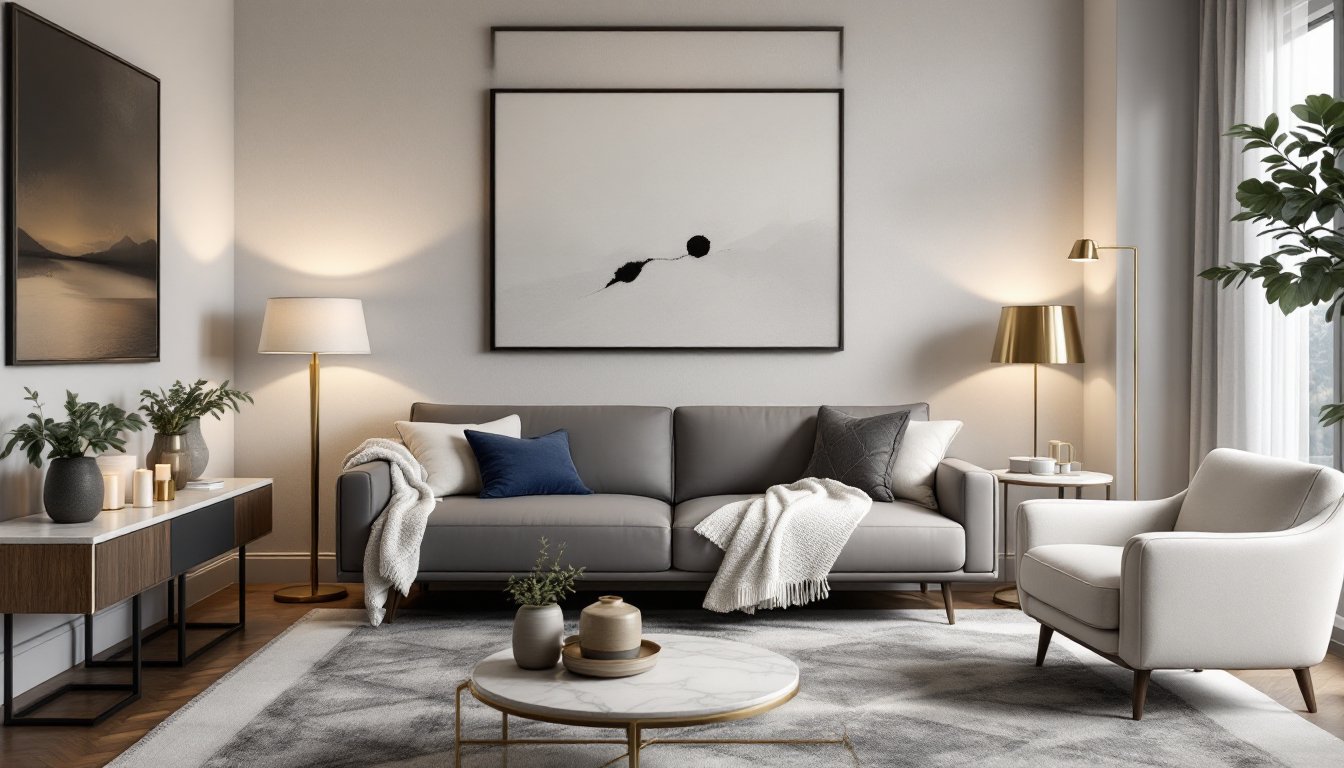
Task lighting: Floor lamps flanking the sofa’s ends provide reading light and sculptural interest. Choose brushed brass, matte black, or chrome finishes that echo the sofa’s metal details. Arc lamps over a side table extend light over the seating area without cluttering the center. Table lamps on console or side tables add warm pools of light that soften gray’s coolness.
Accent lighting: Wall sconces on either side of a feature wall or artwork add depth and drama. LED strips behind floating shelves highlight textures and create ambient backdrop lighting. Picture lights above large art or mirrors emphasize focal points.
Color temperature matters: warm white (2700K) feels inviting and flatters gray leather by adding golden undertones, while cool white (4000K) can make gray appear institutional. Mix warm and cool fixtures, warm floor lamps paired with cool accent lighting, for visual interest. Dimmer switches on all circuits allow flexibility: a brightly lit daytime living room becomes a moody evening retreat with controlled lighting.
Accent Pieces and Decor Styling
Throw pillows and blankets break up gray’s visual monotony and invite comfort. Start with 3–4 pillows on the sofa: mix textures (linen, velvet, knit, faux fur) and colors (one or two in your accent color, one in white or cream, one in a pattern that ties together the palette). Avoid matching sets, thoughtful mismatches feel curated. Drape a chunky knit throw or faux-fur blanket over one arm for cozy texture and functional warmth.
Area rugs define the seating zone and add warmth underfoot. A large wool or jute rug (at least 5×7 feet) anchors the sofa and side seating, creating visual cohesion. Layer a smaller rug for pattern, or choose a solid in your accent color. Rug placement is key: the front legs of major seating should sit on the rug’s surface to ground the arrangement.
Wall art deserves prominence. A large-scale piece (48–60 inches) or a gallery wall of 4–6 smaller frames above a console table behind the sofa anchors the arrangement. Choose art that pulls one or two accent colors from your palette: it creates visual dialogue with the sofa and surrounding décor.
Accent tables, sculptural elements, and greenery humanize the space. A wooden or marble-topped side table next to the sofa, a ceramic or wood sculpture on a console, and potted plants (large fiddle-leaf figs, monstera, or trailing pothos) introduce organic variation. Books, vessels, candles, and minimal decor on surfaces prevent the room from feeling sterile. Styling is about balance: enough to feel lived-in, not so much that the room becomes cluttered or the sofa disappears.
Maintenance and Care for Long-Lasting Beauty
Gray leather demands attention to stay beautiful. Dust weekly with a soft cloth to prevent grime buildup in grain and seams. Rotate and flip cushions every two weeks to distribute wear evenly, this prevents one side from looking faded or worn while others remain pristine.
Blot spills immediately with a clean, dry cloth: don’t rub. For liquid spills, dab gently and allow to air dry. For sticky spots or scuffs, use a slightly damp microfiber cloth and mild leather cleaner suitable for aniline or semi-aniline finishes. Test any cleaner on a hidden area first. Avoid silicone-based or alcohol-heavy products: they dry leather and can cause discoloration.
Condition the leather every 6–12 months with a pH-balanced leather conditioner to prevent cracking and fading. This is especially important in dry climates or near heat sources like fireplaces. Professional deep cleaning every 1–2 years keeps the sofa looking new, particularly in homes with pets or kids. Many leather specialists offer mobile services, they clean on-site with industrial equipment that ordinary vacuum or spot cleaner can’t match.
Place the sofa away from direct sunlight, which fades gray to a washed-out beige over time. Use curtains, blinds, or UV-protective window film if the sofa sits in a sunny room. Keep heat sources (vents, radiators, fireplaces) at least 3 feet away. Leather is organic and sensitive: consistent temperature and humidity (around 50% relative humidity) prevent warping and cracking. With these habits, quality gray leather sofas last 10–15+ years and age gracefully.
Conclusion
A gray leather sofa is an investment in versatility and lasting style. The key is pairing it with intentional color, lighting, arrangement, and care. Choose a shade that suits the room’s natural and artificial light, anchor it with a cohesive color palette, and layer in textures and accents that reflect personal taste. With thoughtful styling and consistent maintenance, a gray leather sofa becomes the centerpiece of a living room that’s both beautiful and genuinely comfortable, one that adapts and evolves without losing its essential character. It’s the foundation for a space that works as hard as it looks.