Table of Contents
ToggleLarge metal wall decor has become the go-to solution for homeowners wanting to add visual punch without committing to a full redesign. Whether it’s an oversized geometric sculpture, an industrial shelving unit, or a decorative metal sign, these pieces instantly elevate a room’s character and anchor a seating area. Unlike paintings or fabric art, metal wall decor demands attention, it catches light, creates texture, and works with nearly any interior style when chosen thoughtfully. This guide walks through selecting, sizing, and maintaining metal wall pieces that fit both your space and your vision.
Key Takeaways
- Large metal wall decor adds visual punch and serves as a sculptural focal point that catches light, creates depth, and instantly anchors your living room without requiring a full redesign.
- Metal pieces are durable and cost-effective compared to traditional art, handling humidity and temperature changes while delivering more impact than gallery walls of framed prints.
- Choose the right size by measuring your wall and aiming for metal wall decor that occupies 50–75% of the wall width above your sofa, typically 3–6 feet depending on room scale.
- Install metal wall decor using heavy-duty fasteners mounted directly to wall studs rather than drywall anchors, as pieces often weigh 20–50+ pounds and may require professional installation.
- Different metals suit different styles: stainless steel for modern spaces, wrought iron for rustic interiors, and brass or copper tones for warm, eclectic designs.
- Maintain your metal wall art with regular soft-cloth dusting, occasional damp cleaning for stainless steel, and annual hardware checks to ensure mounting remains secure over time.
Why Large Metal Wall Decor Makes An Impact
Metal pieces function differently than traditional wall art because they’re sculptural. They cast shadows, reflect light, and create depth, qualities that make a living room feel larger and more intentional. A 4-foot-wide metal wall sculpture immediately becomes a focal point, drawing the eye and anchoring your furniture arrangement around it.
Beyond aesthetics, metal is durable. Unlike canvas or paper, it handles humidity, temperature swings, and the occasional dust cloth without degrading. It’s also versatile: stainless steel suits modern minimalist spaces, wrought iron complements rustic or eclectic interiors, and brass or copper tones warm up industrial or mid-century settings.
Cost-effectiveness matters too. A single statement metal piece often costs less than a gallery wall of framed prints, yet delivers more visual impact. Many homeowners find that one large metal art installation eliminates the need for multiple smaller pieces, simplifying wall styling and reducing decision fatigue.
Popular Styles and Design Trends for Metal Wall Decor
Modern and Industrial
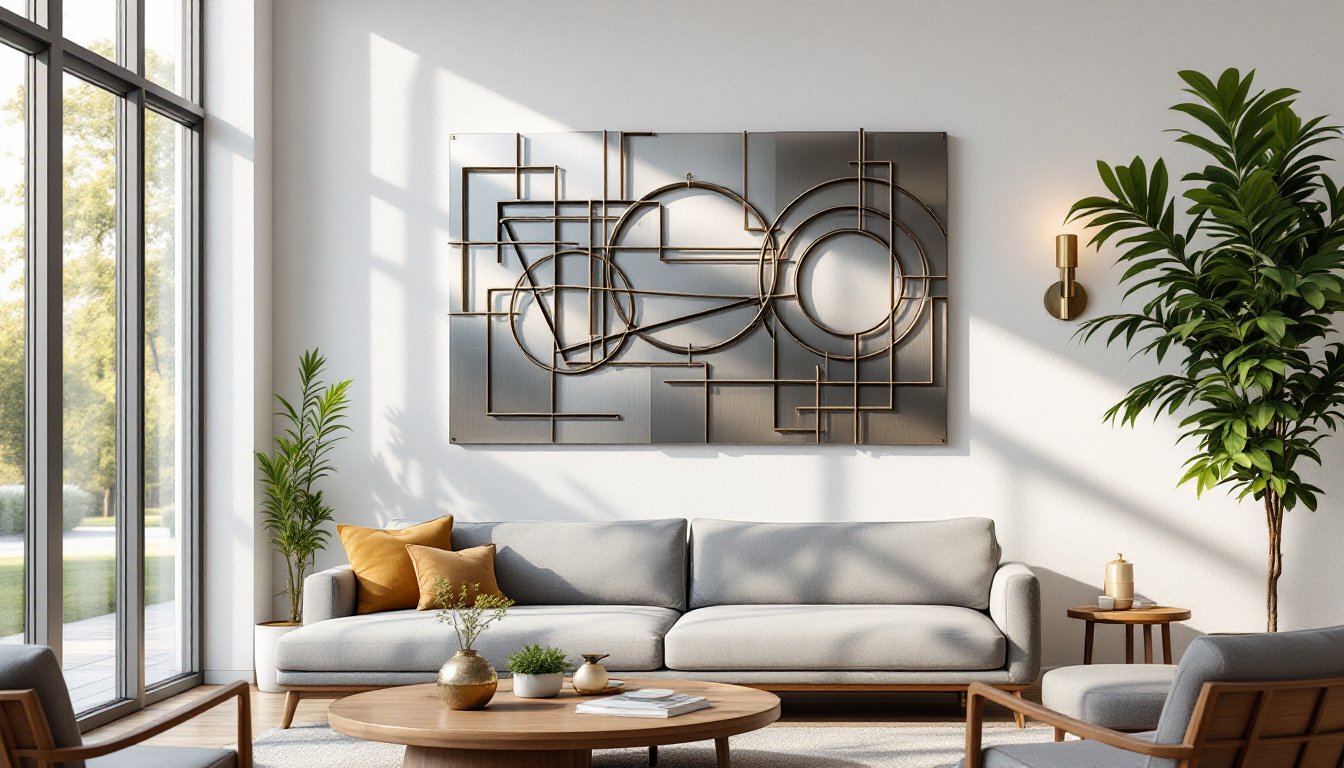
Industrial metal wall art pairs raw materials, exposed steel, iron rods, or brushed aluminum, with clean lines and geometric shapes. Think welded metal screens, 3D geometric wall panels, or abstract line sculptures. These pieces suit loft-style living rooms, open-concept layouts, and spaces with concrete, glass, or exposed brick.
Modern metal decor leans toward minimal, sculptural forms: think a series of simple metal rings, abstract wall-mounted wire art, or sleek metal branches. Polished stainless steel or powder-coated steel finishes keep things contemporary. These work well in minimalist, Scandinavian, or mid-century modern spaces where every element earns its place.
Rustic and Farmhouse
Rustic metal decor embraces patina, texture, and vintage vibes. Wrought iron gates, reclaimed metal panels, weathered steel signs, or ornate iron scrollwork bring farmhouse warmth and authenticity. Rust finishes or oil-rubbed bronze are intentional here, they’re not flaws: they’re features.
Farmhouse metal pieces often reference agriculture or country heritage: old barn doors, vintage windmill designs, or metal silhouettes of roosters, horses, or hay wagons. These fit beautifully in cottages, country homes, or eclectic living rooms where character and history matter more than sleek uniformity.
How To Choose the Right Size and Placement
Size depends on wall space and furniture scale. A living room with a 12-foot-wide wall and minimal seating can handle a 5-to-6-foot-wide metal piece: a cozier room with 10-foot walls works better with 3-to-4-foot installations. A rough rule: the piece should occupy 50–75% of the wall width above your sofa or accent furniture.
Measure the wall before buying. Most retailers list dimensions: cross-check them against your space. Account for wall-mounted shelves, doorways, and light fixtures that might interfere. Hang the piece at eye level when standing, typically 57–60 inches from floor to center, so it integrates naturally with your sight line.
Consider weight carefully. Large metal pieces are heavy, often 20–50+ pounds. Drywall anchors won’t cut it: you’ll need to mount directly to wall studs using heavy-duty fasteners like toggle bolts or lag screws (check your wall type, plaster, brick, or drywall). If unsure about finding studs or drilling into finished walls, consult a professional hanger: installation mistakes risk both the piece and your wall.
Lighting matters. Metal reflects light, so position pieces where they catch natural light or can be illuminated by a wall sconce. This amplifies their sculptural quality and prevents them from disappearing into shadow.
Material and Finish Options Explained
Steel is the workhorse. Carbon steel is strong and affordable but rusts without protective finish: stainless steel resists corrosion better, suits modern spaces, and costs more. Powder-coated steel, steel with a factory-applied protective enamel layer, offers durability and color options while keeping costs reasonable.
Wrought iron is hand-forged, heavier, and develops character over time. It’s pricey but brings authentic rustic warmth. It requires occasional oiling to prevent rust: if you want authentic patina (controlled rust), that’s a feature, not a flaw.
Aluminum is lightweight, won’t rust, and works for large installations where weight is a concern. It’s less durable than steel in high-traffic areas but suits indoor living rooms perfectly.
Brass and copper add warm metallic tones. Brass stays bright with lacquer but can tarnish naturally for a vintage look. Copper develops a beautiful patina over years. Both cost more than steel but pair well with warm, eclectic, or traditional interiors.
Finishes range from brushed (matte, soft) to polished (shiny, reflective) to patina (weathered rust or verdigris on copper). Matte finishes hide fingerprints and dust better: polished finishes show everything but maximize light reflection. Choose based on your tolerance for visible imperfections and your lighting.
Maintenance and Care for Long-Lasting Beauty
Indoor metal wall decor needs minimal fuss compared to outdoor pieces, but small steps extend its life. Dust regularly with a soft, dry cloth or microfiber duster. Avoid harsh scrubbing or abrasive cleaners that can scratch finishes or remove protective coatings.
For powder-coated or stainless steel, a damp cloth works fine: dry immediately afterward to prevent water spotting. Polished brass or copper can be cleaned with a commercial metal polish if you prefer shine, or left to develop natural patina. Wrought iron with a protective oil coating needs occasional re-oiling (annually or as needed) with a light machine oil or linseed oil to maintain rust resistance.
Monitor mounting hardware annually. Check that bolts remain tight and fasteners haven’t loosened. Vibration from HVAC systems or foot traffic can loosen hardware over time: a quick wrench check prevents accidents.
In humid climates (bathrooms, kitchens, damp basements), avoid uncoated iron or bare steel: stick with stainless, powder-coated, or lacquered metals. Indoor living rooms typically avoid these issues, but awareness helps if you’re considering metal art near moisture sources.
Rust on unprotected steel isn’t always bad. Light surface rust develops character on industrial pieces. Deep rust or pitting suggests inadequate protective coating: that’s when refinishing or replacement makes sense.