Table of Contents
ToggleA well-arranged living room makes the difference between a space that works and one that just feels off. Whether someone’s starting from scratch or rearranging furniture they already own, the layout sets the tone for everything, comfort, functionality, and how the room actually flows. The good news? Arranging a living room doesn’t require a design degree or a contractor’s budget. It requires understanding a few core principles: finding a focal point, creating zones for different activities, and respecting traffic patterns. This guide walks through those essentials so any homeowner can confidently arrange their living room in a way that serves their lifestyle and makes the space feel intentional and inviting.
Key Takeaways
- Identify a focal point—fireplace, TV wall, or large window—as the anchor for your living room layout, then arrange primary seating to face or angle toward it for visual organization.
- Create functional zones for different activities (seating, entertainment, reading) by floating furniture away from walls, which also makes the room feel larger and more intentional.
- Respect traffic flow by keeping doorways and natural pathways clear and at least 3 feet wide, positioning secondary storage and less-used pieces along the perimeter instead of blocking movement.
- Apply furniture placement principles like balancing visual weight across the room, angling seating toward conversation, and maintaining 24–30 inches of walking space between pieces for comfortable movement.
- Layer your lighting with ambient, task, and accent sources, and use appropriately-sized rugs and accessories to define zones and add function without creating a cluttered or fragmented appearance.
- Test your arrangement for a week and adjust iteratively—a successful living room layout is one that actually functions for how people live, not how it looks in a magazine.
Start With Your Focal Point
Every living room needs an anchor, a focal point that naturally draws the eye and becomes the organizing principle for furniture placement. In most homes, that’s a fireplace, a large window with a view, or a TV wall. If the room has multiple natural focal points, pick one to emphasize: trying to serve two masters will scatter the layout.
A fireplace is the traditional choice because it’s immovable and creates natural gathering. Arrange the primary seating, typically a sofa and chairs, to face or angle toward it. If there’s no fireplace, a TV wall works just as well, and it’s often what modern living rooms rely on anyway. Mount the TV at eye level when seated (roughly 42–55 inches from the floor to the center of the screen), and position seating so everyone has a clear view without craning necks.
For rooms with large windows or a desirable view, don’t automatically hide them behind furniture. Consider floating the sofa perpendicular to the windows so people can enjoy the light and view while still having a defined seating area. This approach uses architecture as décor rather than fighting it.
If the room truly lacks a strong focal point, blank walls, no fireplace, small windows, create one. A large piece of art, a console table with a mirror, or even an accent wall can serve this purpose. The focal point gives the room visual order and makes arranging everything else significantly easier.
Create Functional Zones
Most living rooms serve multiple purposes. A person might watch TV, read a book, chat with guests, or work from home in the same space. Dividing the room into distinct zones, without needing walls or renovations, makes it work harder and feel more intentional.
Seating Area
The primary seating zone is usually centered on the focal point. A sofa, one or two accent chairs, and a coffee table create the core grouping. The key measurement: people should be able to have a conversation across the seating area without shouting, typically within 8–12 feet. A sofa’s height pairs well with chairs or ottomans that are 12–18 inches lower, so no one feels like they’re sitting in a valley.
Don’t push all furniture against the walls. Floating a sofa (pulling it away from the wall, even just 18 inches) defines the seating zone, makes the room feel larger, and creates space behind the sofa for a console table or shelving. In smaller rooms, a love seat or sectional can do more with less floor space than a traditional sofa-and-two-chairs setup.
Entertainment Zone
The entertainment zone often overlaps with seating but can be distinct if space allows. This is where the TV lives, whether mounted on a wall or on a media console. Keep the console 18–24 inches tall so it doesn’t block sight lines from the seating area, and ensure it has room for cable boxes, speakers, or other equipment without looking cluttered.
If the room has space, create a secondary zone for reading or quiet activities: an armchair in a corner with good natural light, a side table, and a lamp. This zone doesn’t compete with the main seating: it’s an alternative spot for someone who prefers solo time. Room dividers, a bookshelf, or even the angle of furniture can subtly define where one zone ends and another begins.
Furniture Placement Principles
Good furniture placement follows a few practical rules that apply regardless of room size or style:
Balance the visual weight. Heavy furniture (large sofa, media console) should be distributed across the room, not stacked on one side. A sofa on one wall calls for a substantial bookshelf, console, or accent wall treatment on the opposite side.
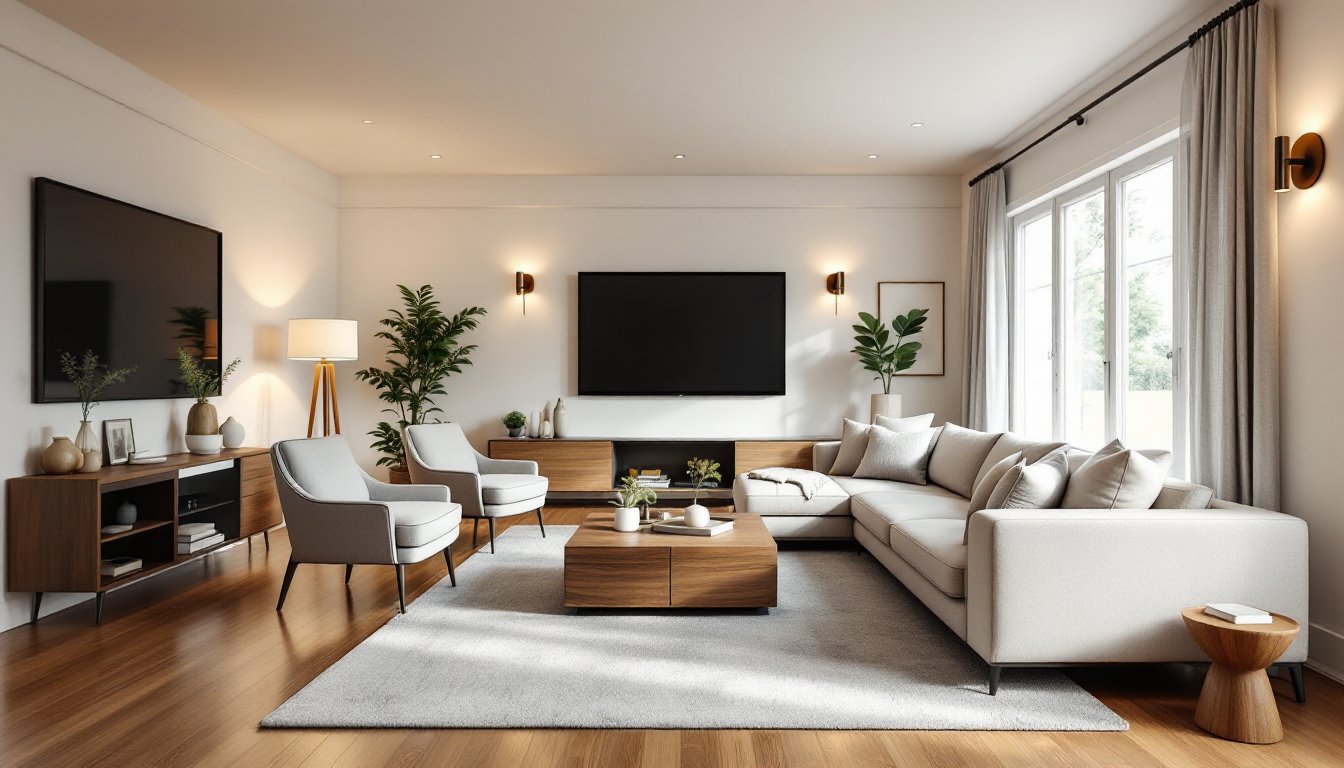
Angle seating toward conversation. Sofas and chairs arranged at slight angles (45 degrees) toward each other feel friendlier than everything facing the same direction. If the room’s main function is TV-watching, one or two chairs can angle slightly inward while the sofa faces the screen, this gives TV watchers a clear view while making the space feel less rigid.
Leave walking space between pieces. A person should be able to move between furniture without doing an awkward shuffle. Aim for at least 24–30 inches of walking space between a sofa and a coffee table, and 18 inches minimum between seating and a wall. Tighter is okay for occasional passing: larger gaps feel more spacious.
Use a coffee table appropriately. A coffee table should sit 12–18 inches from the sofa. It’s easy to kick or trip on when set too close, and it looks disconnected if set too far. Choose a height within 12–18 inches of the sofa’s seat depth for visual proportion.
Consider scale. Oversized furniture in a small room overwhelms: undersized pieces in a large room get lost. Measure the room and test furniture dimensions before buying. A sofa shouldn’t eat more than two-thirds of a wall, and a rug should anchor the seating area while leaving at least 12 inches of hardwood or floor exposed around its edges.
Maximize Traffic Flow and Spacing
Traffic flow, how people naturally move through the room, is where many layouts fail. Ignoring it creates a space that feels cramped or awkward even if it’s technically big enough.
Map the pathways. Identify the doorways and the routes people take most often (from the entry to the kitchen, to the hallway, to other rooms). These paths should be clear and at least 3 feet wide. Don’t put a coffee table or accent chair directly in the main traffic lane: it’ll get stubbed toes and will annoy anyone moving through the room.
Use the room’s perimeter for secondary storage or less-used pieces. A bookshelf, console, or accent chair along a wall doesn’t interfere with traffic and keeps the center of the room open. This is especially important in smaller living rooms where every inch counts.
Check sight lines. No one should have to crane their neck or dodge furniture to see the TV or focal point. Walk through the room from different angles, especially from the doorway or a hallway entrance, and notice where sightlines get blocked. Adjust if needed.
For rooms with multiple doorways or openings, furniture arrangement should respond to them. Don’t block a doorway with a sofa arm or create a “dead zone” in the corner. Instead, treat openings as part of your layout logic, they dictate where traffic naturally flows and where you can safely place larger pieces.
Add Lighting and Accessories
Lighting and accessories transform a functional layout into a finished room. They’re not decorative afterthoughts: they make the space livable.
Layer your lighting. Rely on three types: ambient (overhead or ceiling fixtures), task (reading lamps beside seating), and accent (wall sconces, uplighting on art). Overhead alone feels harsh and institutional. A combination of sources lets people adjust the mood and functionality. Place reading lamps on end tables next to seating, aim for the bulb to be at shoulder height when seated, so light falls on a book or lap without creating glare.
Rugs anchor zones. A rug defines the seating area and adds warmth underfoot. It should be large enough that at least the front legs of sofas and chairs sit on it (typically 5×8 feet or larger for a primary seating area). A rug that’s too small makes the room feel fragmented.
Accessories add function and personality. Side tables beside seating hold lamps, drinks, and remotes. A console table behind a floating sofa displays books or adds storage. Wall art above seating or the sofa breaks up blank walls. These pieces shouldn’t be an afterthought, they’re part of the layout because they serve the room’s use.
Keep scale consistent. Artwork, mirrors, and shelving should relate proportionally to the furniture below them. A tiny mirror above a large sofa looks lost: a wall of framed photos above a small side table feels crowded. When in doubt, hang art at 57–60 inches from the floor to the center of the piece, this is a comfortable eye level for most people standing or sitting.
Accessories also help with traffic flow, a console or side table can subtly redirect traffic around seating zones without using a wall or divider.
Final Thoughts: Arrange, Test, Adjust
The best living room layout isn’t one that looks perfect in a magazine, it’s one that works for how people actually live. Start with the focal point, zone your spaces, respect traffic flow, and layer in lighting and accessories. Then live with it for a week. Notice what feels awkward, where traffic bottlenecks, and whether the seating really invites conversation or TV-watching.
Good layout is iterative. Moving a chair 18 inches or swapping the placement of two lamps can solve what felt “off.” The goal is a room that functions smoothly, feels intentional, and genuinely serves the household. That’s the foundation of a living room that works.