Table of Contents
ToggleIndoor plants have moved beyond decorative afterthoughts, they’re now recognized as functional elements that improve air quality, boost mood, and enhance a living room’s visual appeal. A homeowner looking to refresh their space doesn’t need a greenhouse or a botanical degree to add greenery indoors. With the right plant selection and straightforward care routines, anyone can create a thriving indoor garden that complements their living room design while requiring minimal maintenance. This guide covers everything a DIYer needs to know: which plants actually thrive indoors, how to arrange them effectively, and what to do to keep them healthy for years.
Key Takeaways
- Indoor plants for your living room improve air quality by filtering toxins, reducing stress, and naturally regulating humidity while adding visual depth and dimension to your space.
- Low-maintenance varieties like Pothos, Snake Plants, Peace Lilies, and ZZ Plants are ideal for beginners because they tolerate low light, irregular watering, and occasional neglect.
- Strategic placement using varying heights and light zones—combined with proper drainage containers sized 1–2 inches larger than the root ball—prevents the leading cause of houseplant failure: root rot.
- Watering should follow the “top inch of soil is dry” rule, with frequency adjusting seasonally; in winter, most plants need 50% less water than during growing season.
- Research specific light requirements before purchase, as “bright indirect light” and “low light” have distinct meanings that directly impact whether plants thrive or struggle in your living room.
Why Indoor Plants Belong in Your Living Room
Beyond aesthetics, indoor plants serve practical purposes that make them worth the modest effort required. They absorb carbon dioxide and release oxygen while filtering common household toxins like formaldehyde and xylene, the same chemicals found in paint, adhesives, and upholstered furniture. A study cited by NASA shows that certain houseplants can remove up to 87% of air toxins in 24 hours, though real-world results depend on plant type and room size.
Psychologically, living plants reduce stress and improve focus. A homeowner sitting in a room with visible greenery reports lower anxiety levels compared to bare walls. This effect holds true even for people without a self-identified green thumb: the presence of life and color matters more than perfection.
Practically speaking, indoor plants also help regulate humidity levels. As they transpire (release water vapor through leaves), they naturally humidify dry indoor air, particularly helpful during winter months when heating systems strip moisture away. A 6-foot Dracaena or Rubber Plant can add several percentage points to room humidity without any extra work.
From a design perspective, plants fill vertical and horizontal space with texture, color, and dimension. They soften hard architectural lines, draw the eye upward, and make a living room feel intentionally curated rather than staged.
Best Indoor Plants for Living Room Success
Choosing the right plant species is the foundation of indoor gardening success. The best candidates tolerate average household light conditions, don’t demand constant watering, and withstand occasional neglect, realistic expectations for busy homes.
Pothos (also called Devil’s Ivy) is nearly impossible to kill. It adapts to low to bright indirect light, grows quickly, and forgives inconsistent watering. Trailing varieties work well on high shelves or hanging baskets.
Snake Plants (Sansevieria) are the ultimate low-maintenance choice. They thrive in low light, require water only every 3–4 weeks, and actually prefer drier soil. They’re structural too, their upright, architectural leaves add visual interest without taking up floor space.
Philodendrons offer flexibility. Both climbing and non-climbing varieties tolerate low light and irregular watering. Heart-shaped leaves look elegant in any décor, and they’re forgiving enough for beginners.
ZZ Plants thrive on neglect. They tolerate low light, inconsistent watering, and recover quickly from stress. Their waxy, compound leaves are naturally glossy and pest-resistant.
Monstera Deliciosa (Swiss Cheese Plant) demands brighter, indirect light but rewards with dramatic, split leaves that become a focal point. It’s an ideal choice for living rooms with windows that receive morning or afternoon sun.
Fiddle Leaf Figs need commitment, bright indirect light, consistent watering, and occasional leaf cleaning, but their large, architectural presence transforms a space.
Low-Light Champions and Easy-Care Options
Not every living room has abundant natural light. North-facing rooms, apartments with small windows, or homes shaded by mature trees require plants that genuinely thrive in low light rather than merely survive.
Cast Iron Plants live up to their name. These fern-like plants tolerate neglect, low light, and inconsistent conditions. They’re slow-growing but extremely reliable.
Peace Lilies bloom indoors with minimal fuss and actively indicate when they need water, they’ll droop dramatically and perk back up within hours of watering. This feedback loop makes them excellent for learning proper watering timing.
Parlor Palms bring tropical texture to dim corners. They grow slowly, need minimal maintenance, and add height without requiring much floor footprint.
For any low-light plant, remember that “low light” still means indirect daylight or bright artificial lighting, not a dark closet. Place these varieties near north-facing windows or 3–5 feet away from south or west-facing windows. Rotating plants every 2–3 weeks ensures even growth on all sides.
Designing Your Living Room Plant Layout
Strategic placement transforms random potted plants into a cohesive design feature. The goal is distributing plants at varying heights and in complementary locations rather than lining them all along one wall.
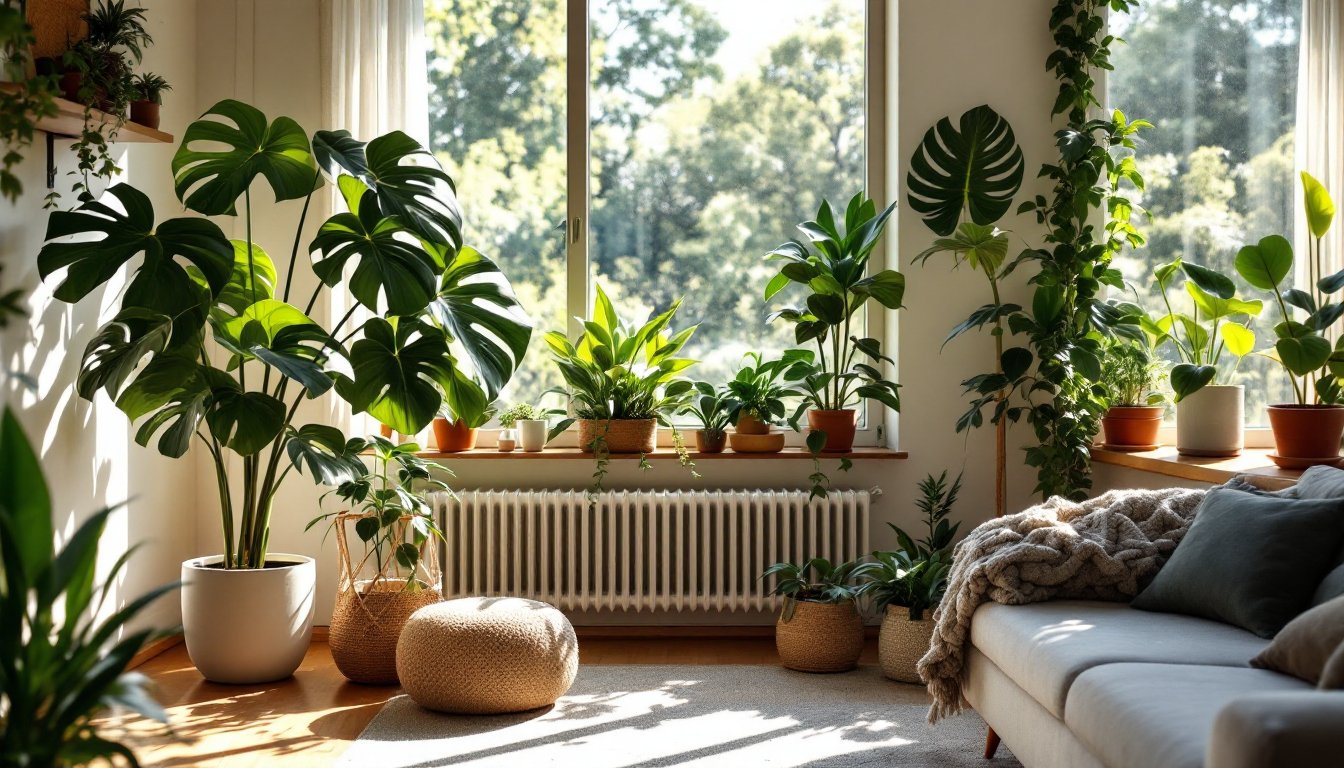
Start by identifying light zones. Window sills get the brightest indirect light, prime real estate for Monsteras, Fiddle Leaf Figs, or trailing Pothos in hanging baskets. Corners 3–5 feet from windows work for mid-light plants like Philodendrons. Dark corners far from windows suit Snake Plants and Cast Iron Plants.
Create visual balance using the rule of thirds. Rather than centering one large plant, place it to one side of a room with smaller plants and complementary décor on the other. This arrangement feels intentional without appearing staged.
Varying heights adds dimension. Tall plants (floor-standing or on plant stands) draw the eye upward and open up the space visually. Mid-height plants on shelves or tables create layers. Trailing plants on high shelves or in hanging baskets add greenery without consuming floor space.
Consider plant size at maturity, not at purchase. A 6-inch Monstera seedling can reach 8 feet in a few years. Give it room to grow without overcrowding furniture or blocking windows.
Choosing the Right Containers and Placement
Containers are both functional and aesthetic. The primary job is drainage, almost every indoor plant requires a pot with drainage holes to prevent root rot, the leading cause of houseplant death.
Material matters. Terracotta breathes, allowing soil to dry faster: it’s ideal for succulents and plants that prefer drier conditions. Ceramic and glazed pots retain moisture longer and suit plants preferring consistent dampness (Philodendrons, Peace Lilies). Plastic pots are lightweight and retain moisture well: use them for hanging baskets or when weight limits exist.
Sizing is straightforward: choose a pot only 1–2 inches larger in diameter than the plant’s current root ball. Oversized pots hold excess moisture and invite root rot. A plant in a too-large container will struggle even with correct watering.
Placement within the room matters beyond light conditions. Keep plants away from heating vents, air conditioning units, and cold windows in winter, temperature swings stress plants. High-traffic areas prone to knocking over pots are poor choices for tall or heavy plants. Consider saucers or waterproof liners under pots to protect floors and furniture from water damage.
Essential Care Tips for Thriving Indoor Plants
Watering is both critical and misunderstood. “Water when the top inch of soil is dry” is the reliable guideline. Stick a finger into the soil, if it feels moist beyond the surface, wait a few days. If dry, water thoroughly until it drains from the bottom holes, then empty the saucer to prevent sitting water.
Frequency varies by season and plant type. In winter, when growth slows and evaporation decreases, most plants need less water, sometimes half as often as summer. A Snake Plant might need water only every 4–5 weeks in winter versus every 3 weeks in summer.
Light exposure determines plant health more than any other factor. Read plant tags or research specific varieties before purchase. “Bright indirect light” means near a window but not in direct sun (which can scorch leaves). “Low light” means tolerating dim conditions, not thriving in darkness.
Humidity helps most tropical houseplants. Group plants together so they create a microclimate of shared moisture. Mist foliage occasionally, though this is supplemental, not a primary watering method. If your home is very dry, place plants on pebble trays (a shallow tray with pebbles and water: pot sits on top) to increase ambient humidity without waterlogging roots.
Fertilizing feeds plants but isn’t necessary every month. During growing season (spring and summer), apply a balanced liquid houseplant fertilizer at half-strength every 4–6 weeks. In fall and winter, skip fertilizing entirely, plants rest and don’t need feeding.
Pest prevention starts with inspection. Check new plants before bringing them home and quarantine them for a week if you suspect issues. Indoor pests, spider mites, mealybugs, and scale insects, spread quickly in confined spaces. Spray infested plants with neem oil or insecticidal soap, following label directions carefully.
Leaf cleaning isn’t glamorous but matters. Dust accumulates on leaves, reducing photosynthesis efficiency. Wipe large-leaved plants (Monsteras, Rubber Plants) monthly with a soft, damp cloth. Skip commercial “leaf shine” products: plain water works fine.
Repotting happens every 12–18 months for fast growers, less frequently for slow types. Signs include roots emerging from drainage holes or water running straight through without absorbing. Spring is the ideal timing. Use fresh potting soil (not garden soil, which compacts indoors), choose a pot 1–2 inches larger, and water gently after repotting to settle soil.
Conclusion
Indoor plants transform a living room from a functional space into a healthier, more visually interesting environment. Starting with proven low-maintenance varieties like Pothos, Snake Plants, or Peace Lilies removes the guesswork. Thoughtful placement, varying heights, respecting light zones, and leaving room for growth, creates a design-forward result. Consistent watering, appropriate light, and occasional maintenance keep plants thriving for years. Whether a homeowner has never grown anything or is returning to houseplants after a break, the combination of forgiving plant species and straightforward care makes success achievable.